Tinct
Bekhbaatar Enkhtur
Tinct
Madrid
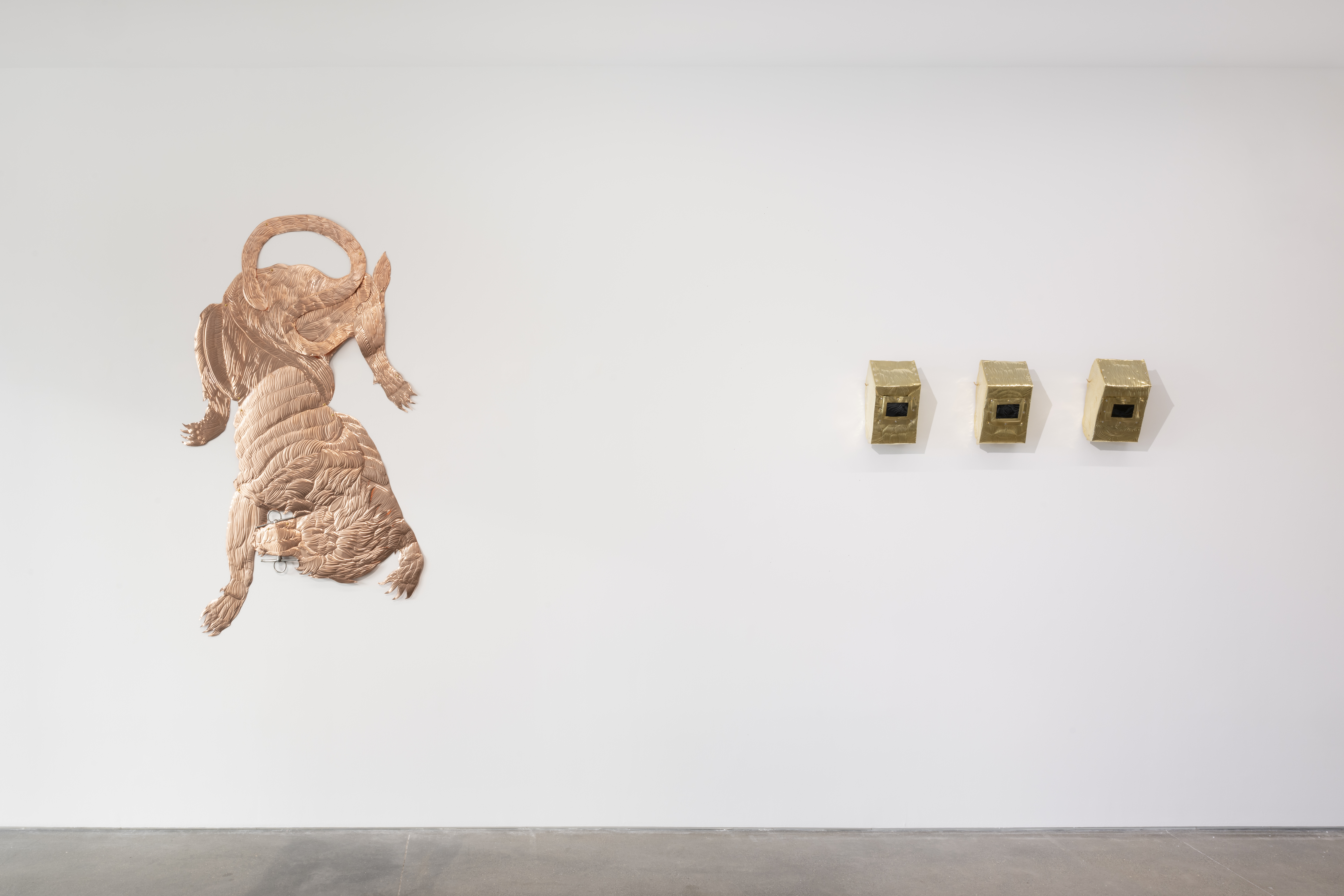
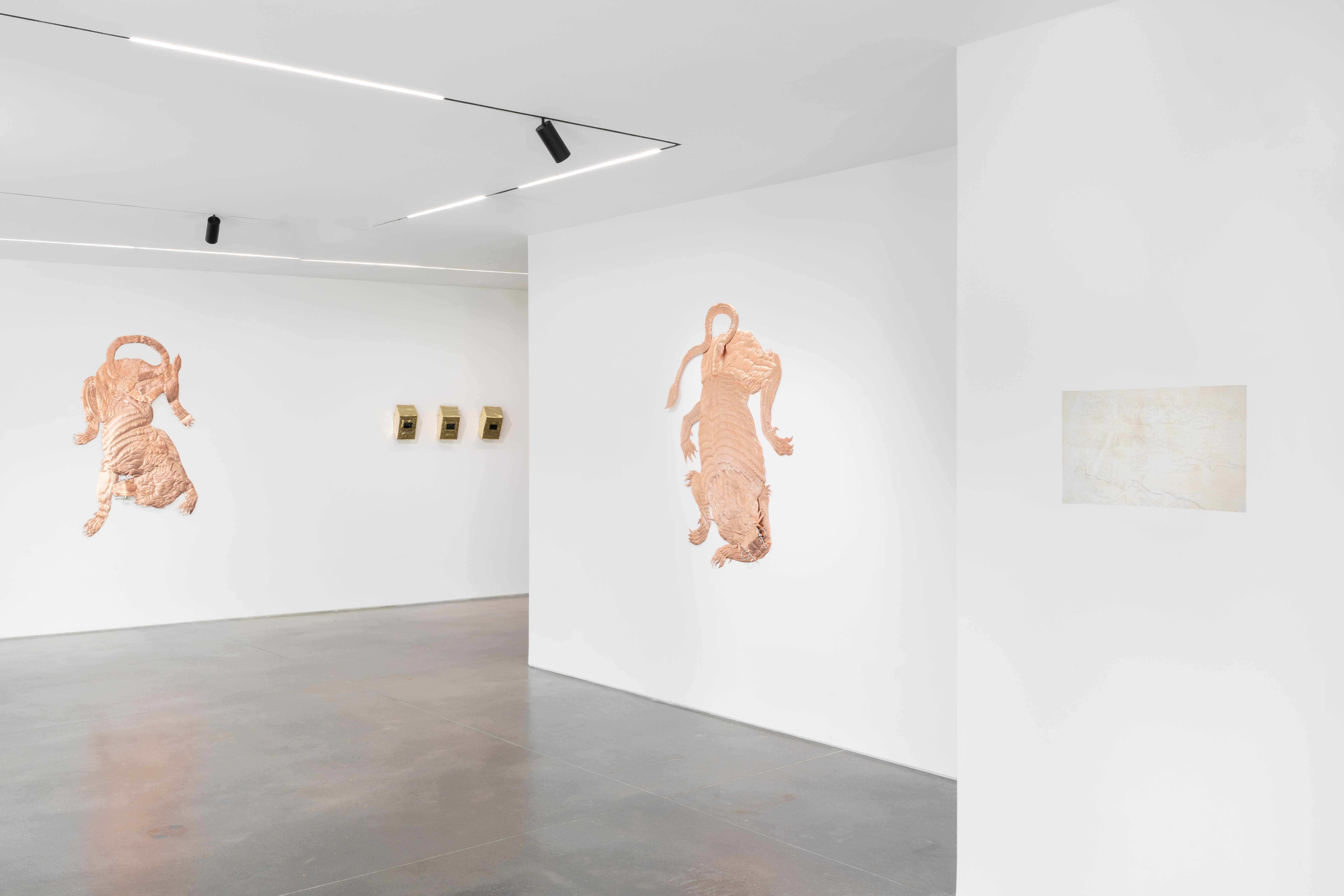
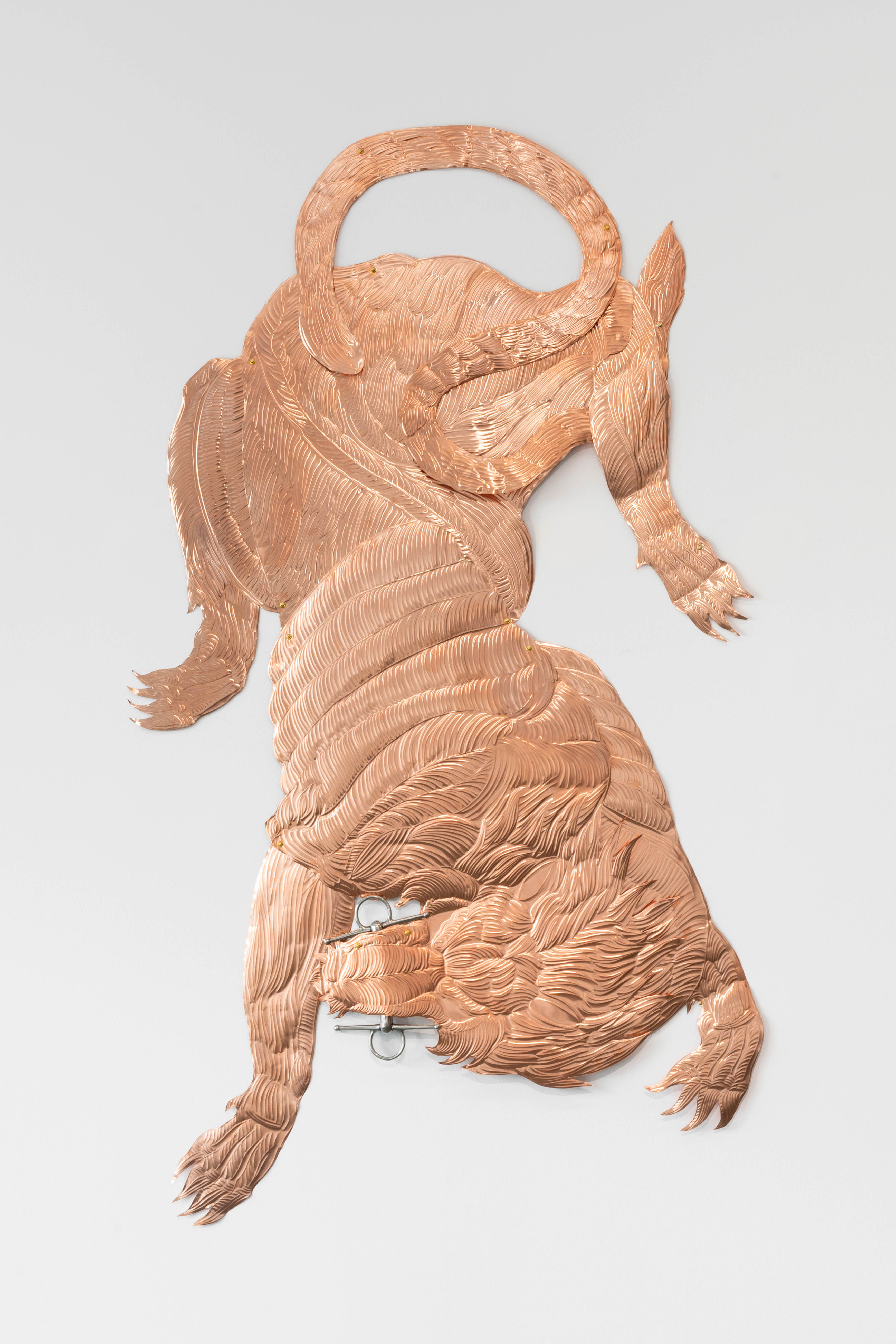
A group of creatures inhabiting the realm of the fantastic and the mythological assemble within the space of Tinct, Bekhbaatar Enkhtur’s new solo exhibition at Galeria Pedro Cera Madrid’s branch, marking the artist’s debut in Spain.
As both title and guiding principle, Tinct refers to the subtle infusions that permeate both matter and memory, allowing different forces to synthesize in continuous motion. Working through a visual language distinctly his own, shaped by meticulous attention to matter as a living substrate of animist resonance, Enkhtur condenses a constellation of morphologically striking entities inspired by the vast landscape of legends and myths that permeate Central and East Asian traditions, as well as the artist’s own Mongolian heritage. These stories, long carried through oral transmission across expansive territorial distances, accrue layers of narrative variation in a mutability of forms that shapes the conceptual substratum of the exhibition, a world structed by transitions, metamorphic rhythms, and temporal dilations of non-hierarchical passage.
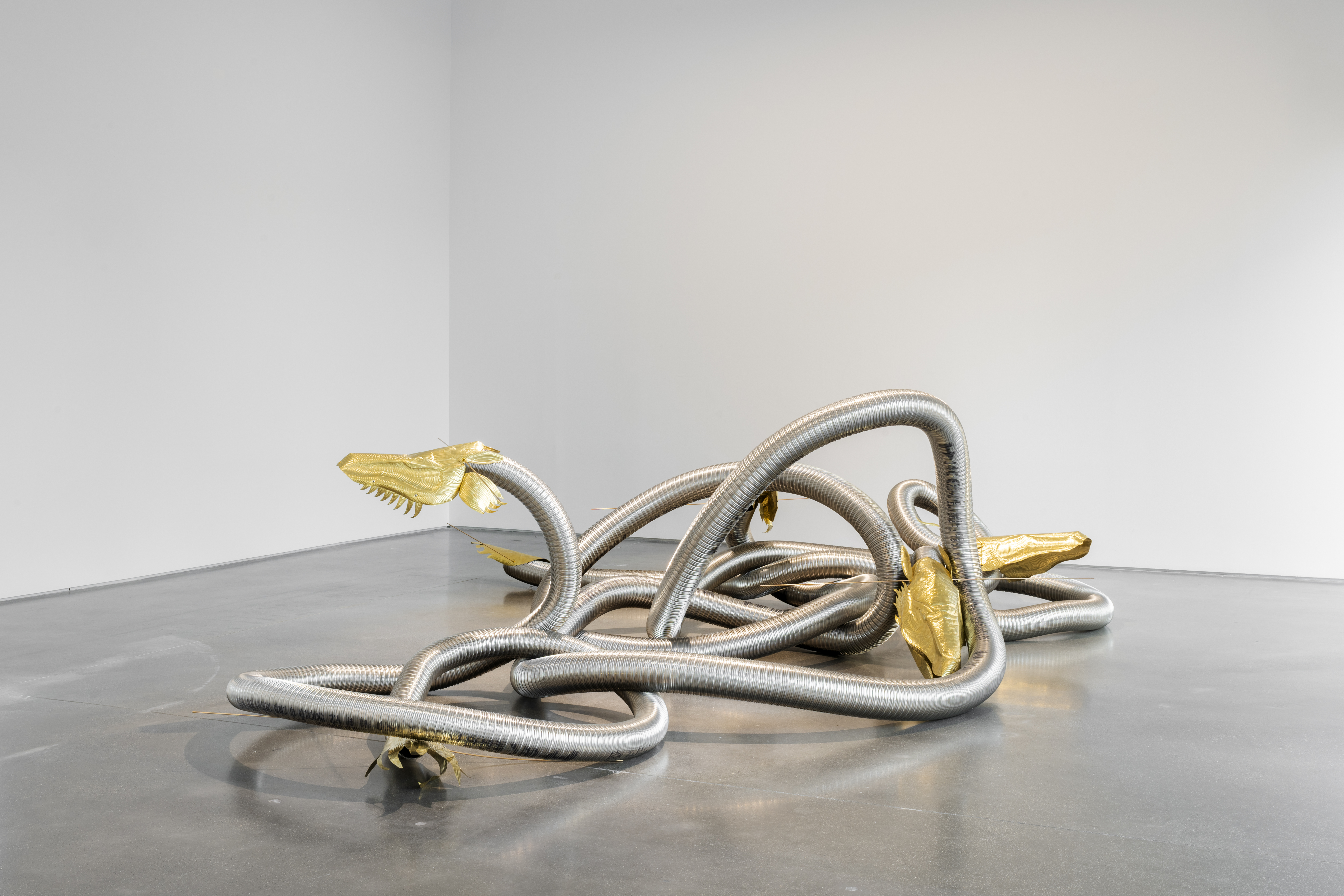
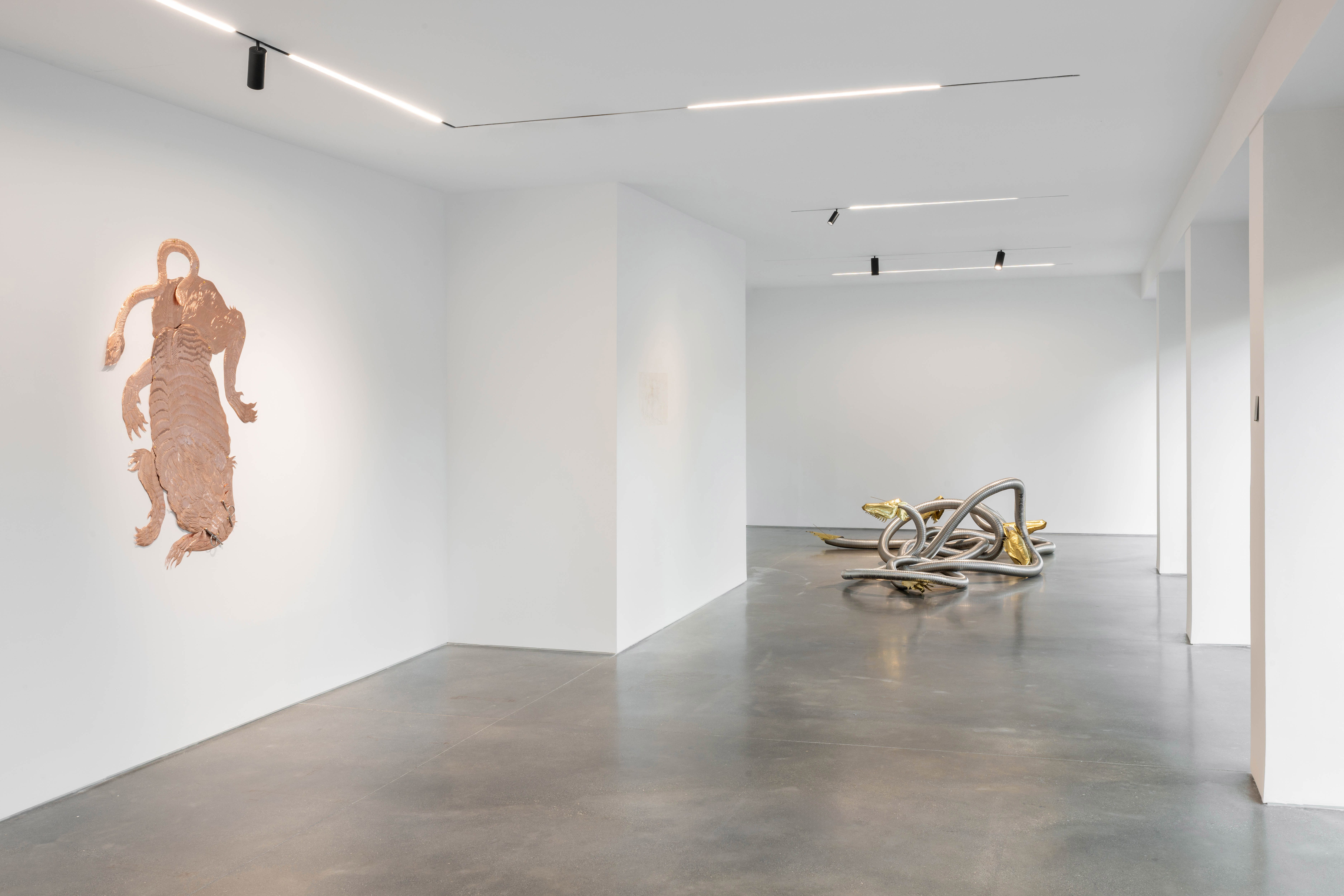

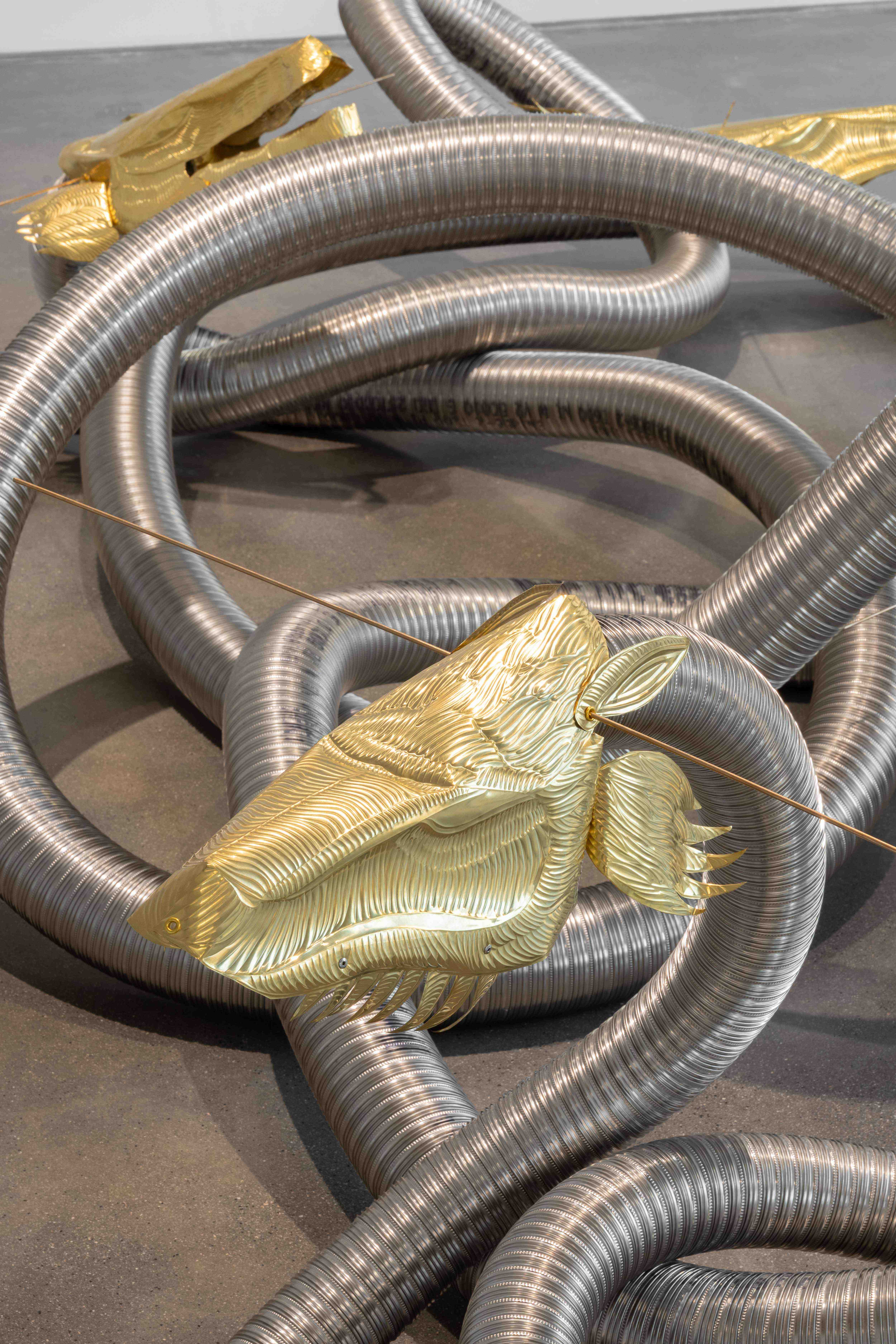
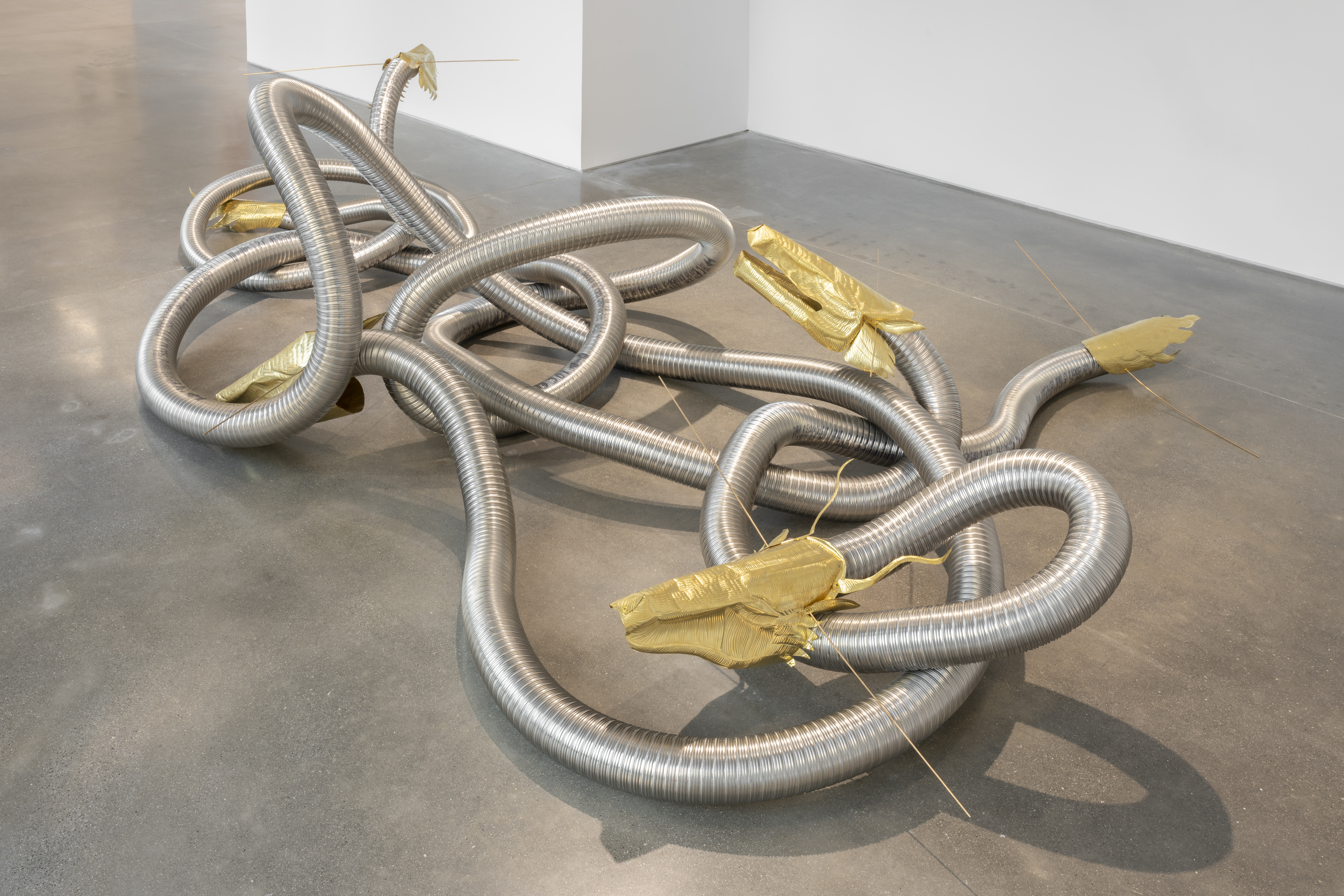
Anchoring this axis, Untitled (2025)’s serpentine, amorphous appearance unfolds without beginning, a coiled and indeterminate body from which bronze dragon heads bifurcately emerge, their delicate modelling counterposed to the industrial hoses that support them. Enclosing a semi-recognizable entity within the dissipating mass below, the work draws from medieval Turko-Persian iconographies of Aeshma-daeva – precursor to Asmodeus and figure of earthly excess – found in albums such as Siyah Qalem (1), where a single body proliferates into multiple heads. Inheriting this imagistic logic, Enkhtur defines a structural principle that not only reproduces a rich iconographic devise but also binds the instability and simultaneously generative nature of mythic transmission.
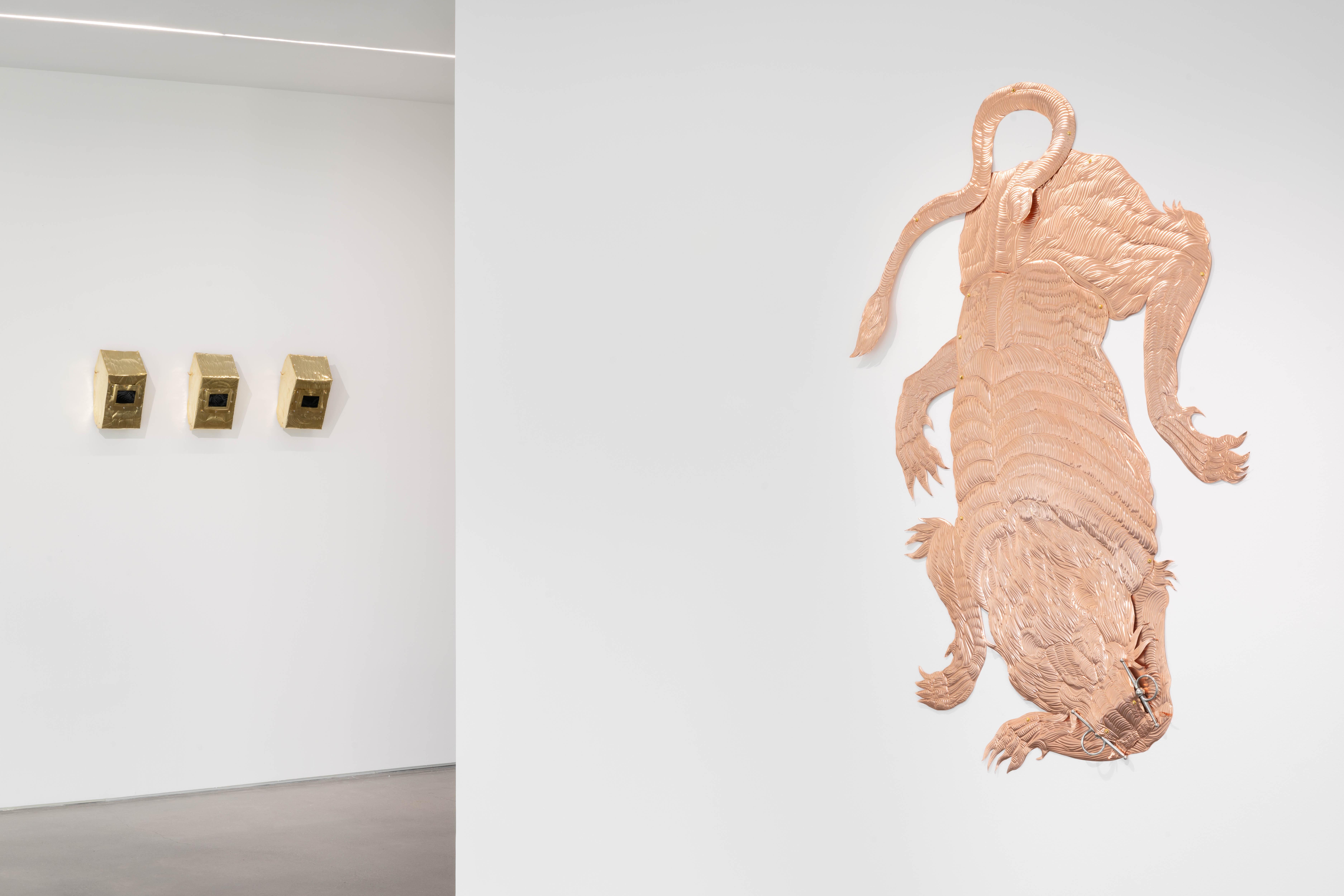
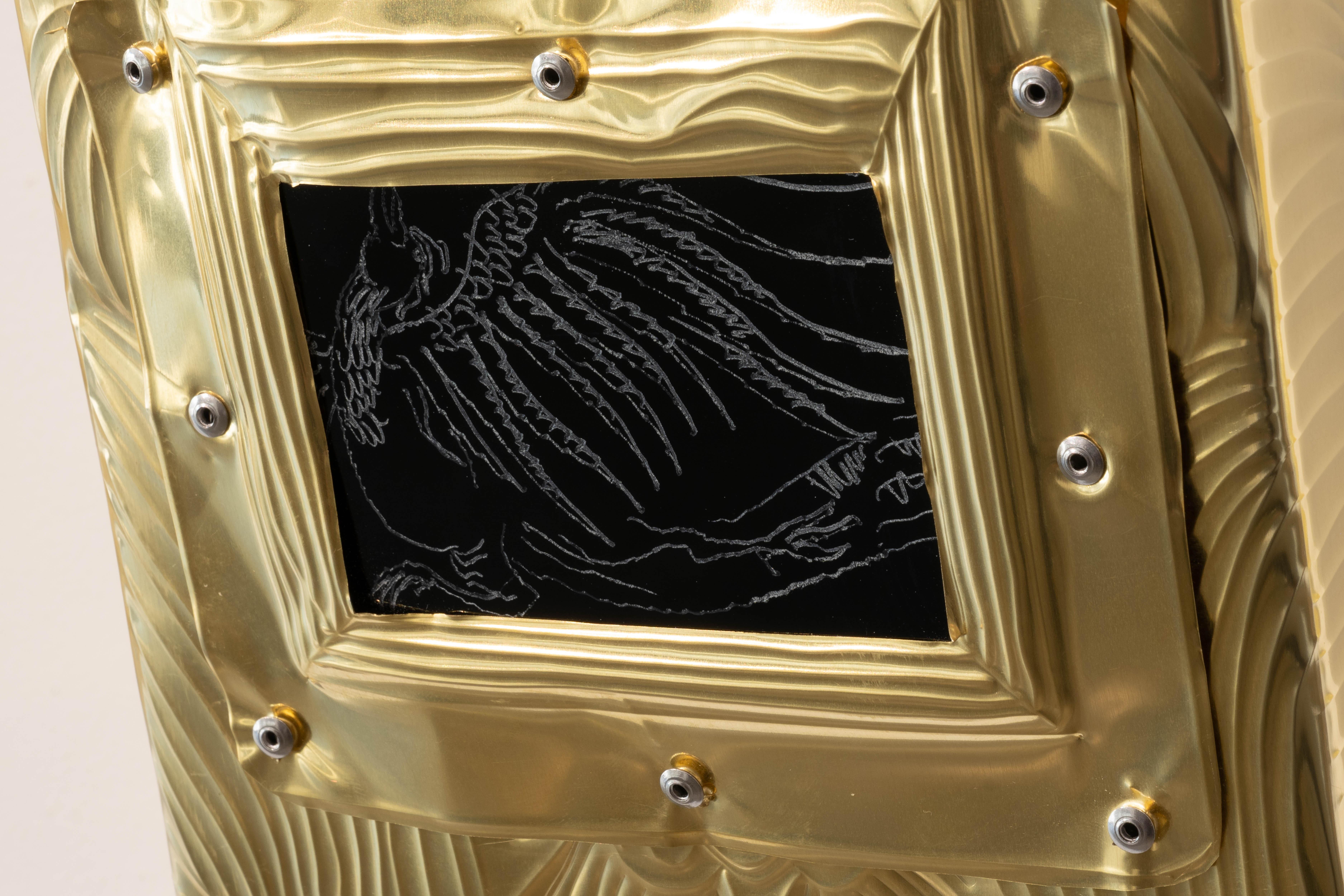
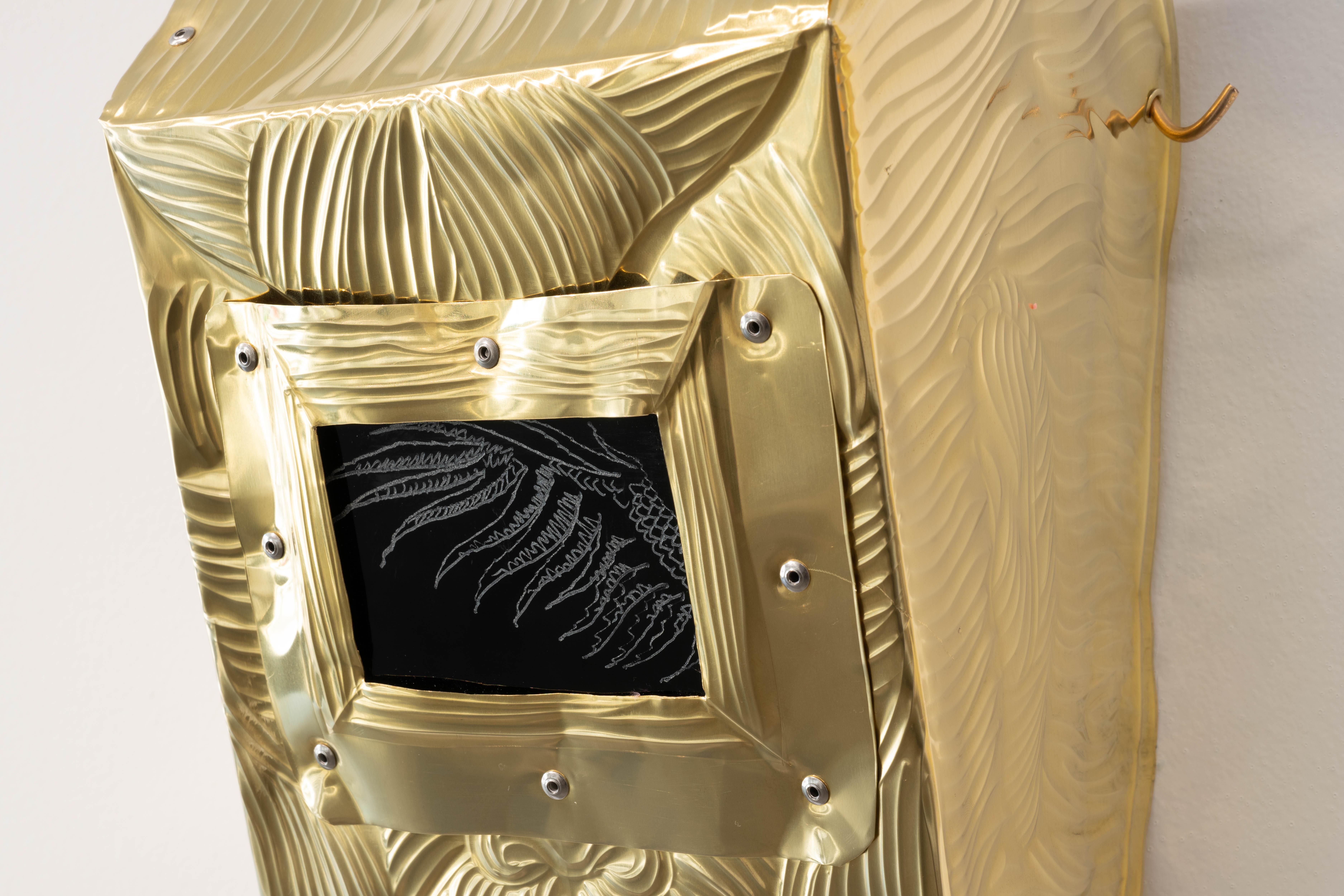
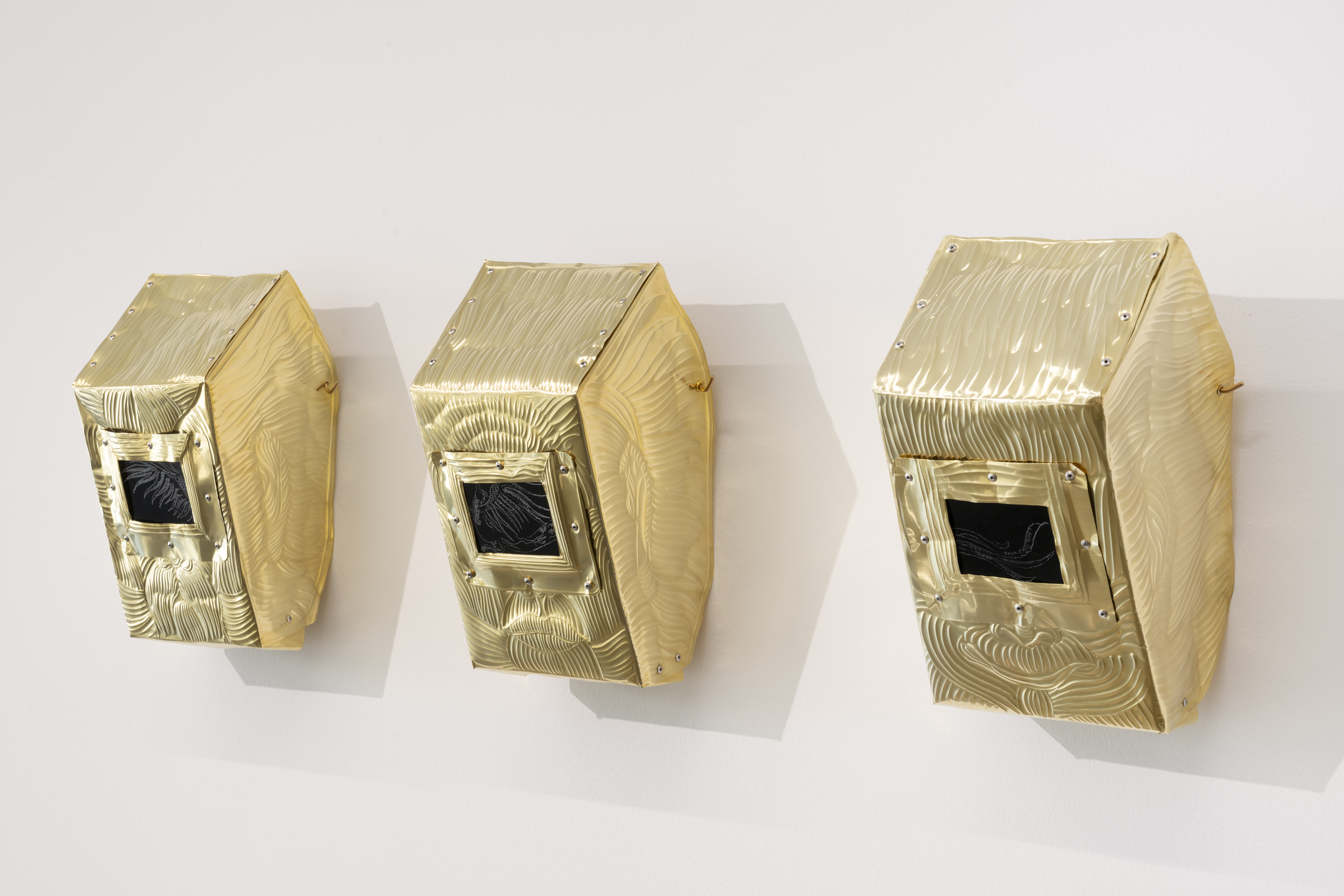
Suspended in a similar intermediate register, the assemblage of welding masks constituting Sumurgh (2025) indexes its form to its own material, invoking fire as a transforming element through which matter softens and reforms into new potentialities. On the surface of their protective visors, Enkhtur inscribes the Simurgh, the ancient Persian winged creature associated with renewal and the cyclical passage between life and death. Unlike more static myth figures, the Simurgh embodies a temporal expanse that encompasses the knowledge of all eras, described in Classical and Modern Persian literature as a metaphor for God himself in Sufi mysticism.
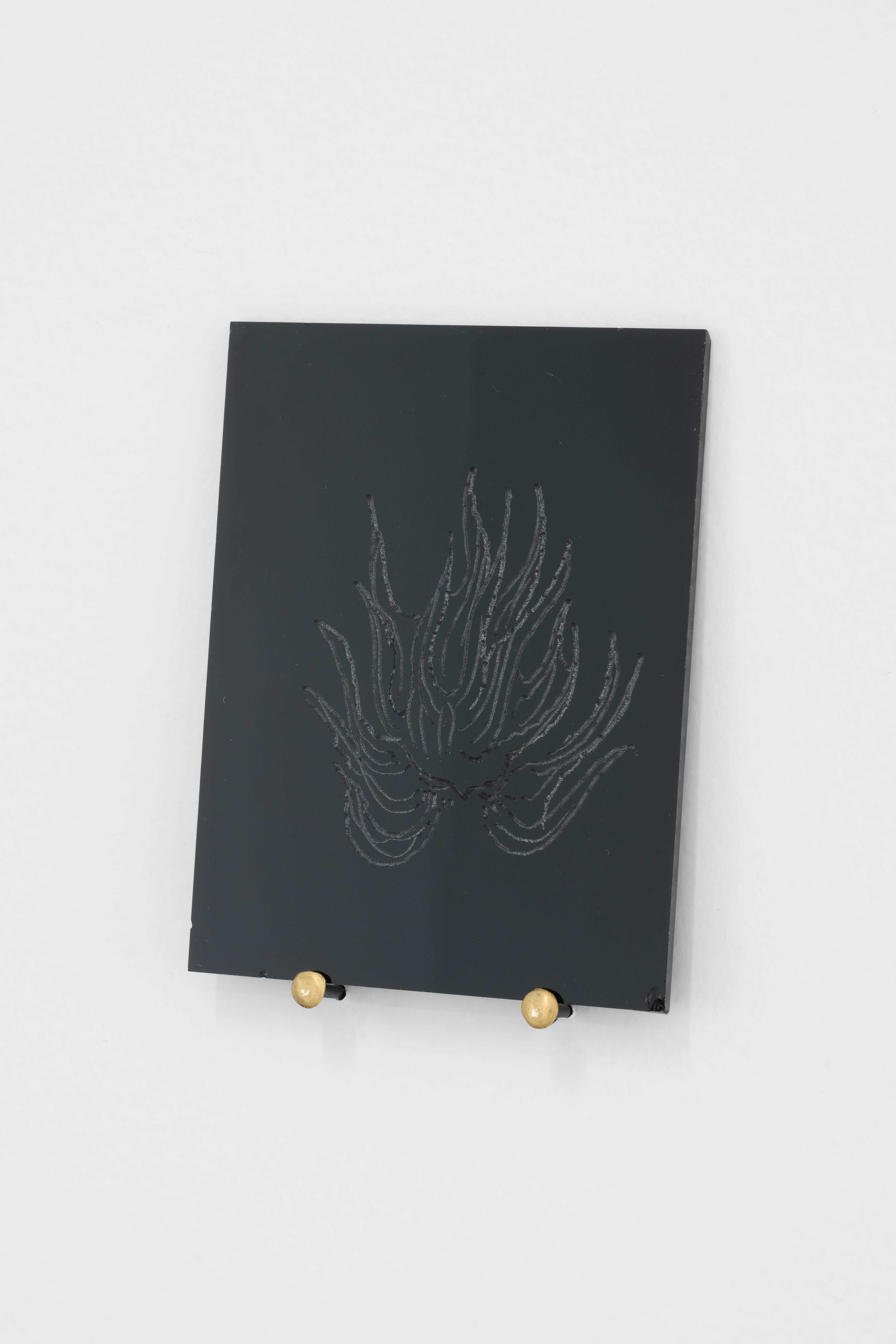
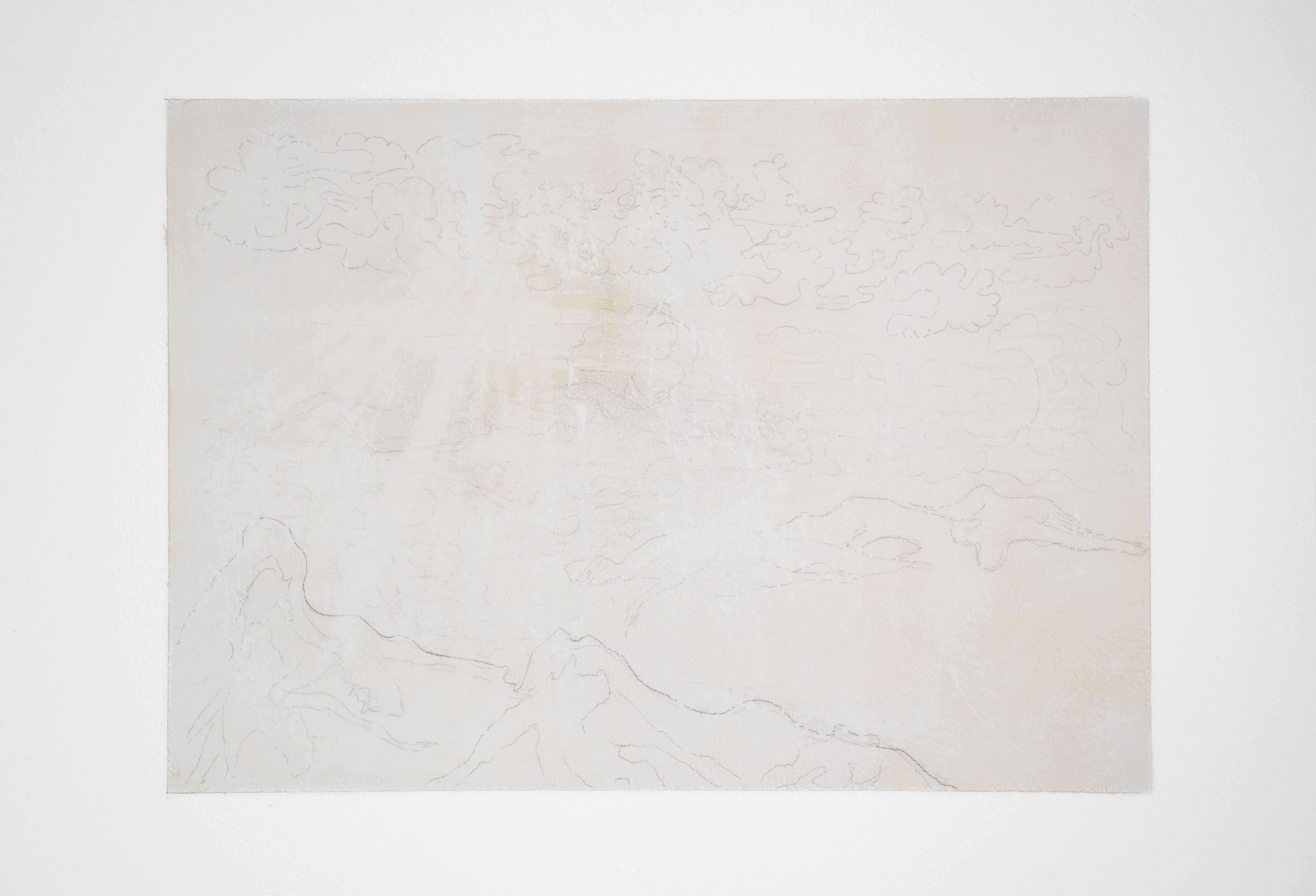
Untitled and Sumurgh then appear as two forces that, while conceptually opposed, rely upon one another in a dynamic balance between creation and destruction (or the good and evil), establishing a continuous reciprocity tincted by the impermanence of each movement. Their correlative tension articulates a structural logic that reverberates across Untitled 2 (2025) and Untitled (2025), their material fragility unfolding both through the delicate, flame-like engraving on glass – an element in perpetual flux, reproduced upon the surface of a vulnerable medium and animated by it – and through the beeswax applied directly onto the wall, where the faint outlines of a Bardo are timidly sketched. By depicting this Tibetan Buddhist figurative concept that describes the transitory state between life and death, Untitled’s inherent impermanence – as wax is vulnerable to environmental shifts – becomes inseparable from its conceptual framework, revealing the immanent oblivion at the end of a cycle to which the work itself is materially subject as an in-situ totem

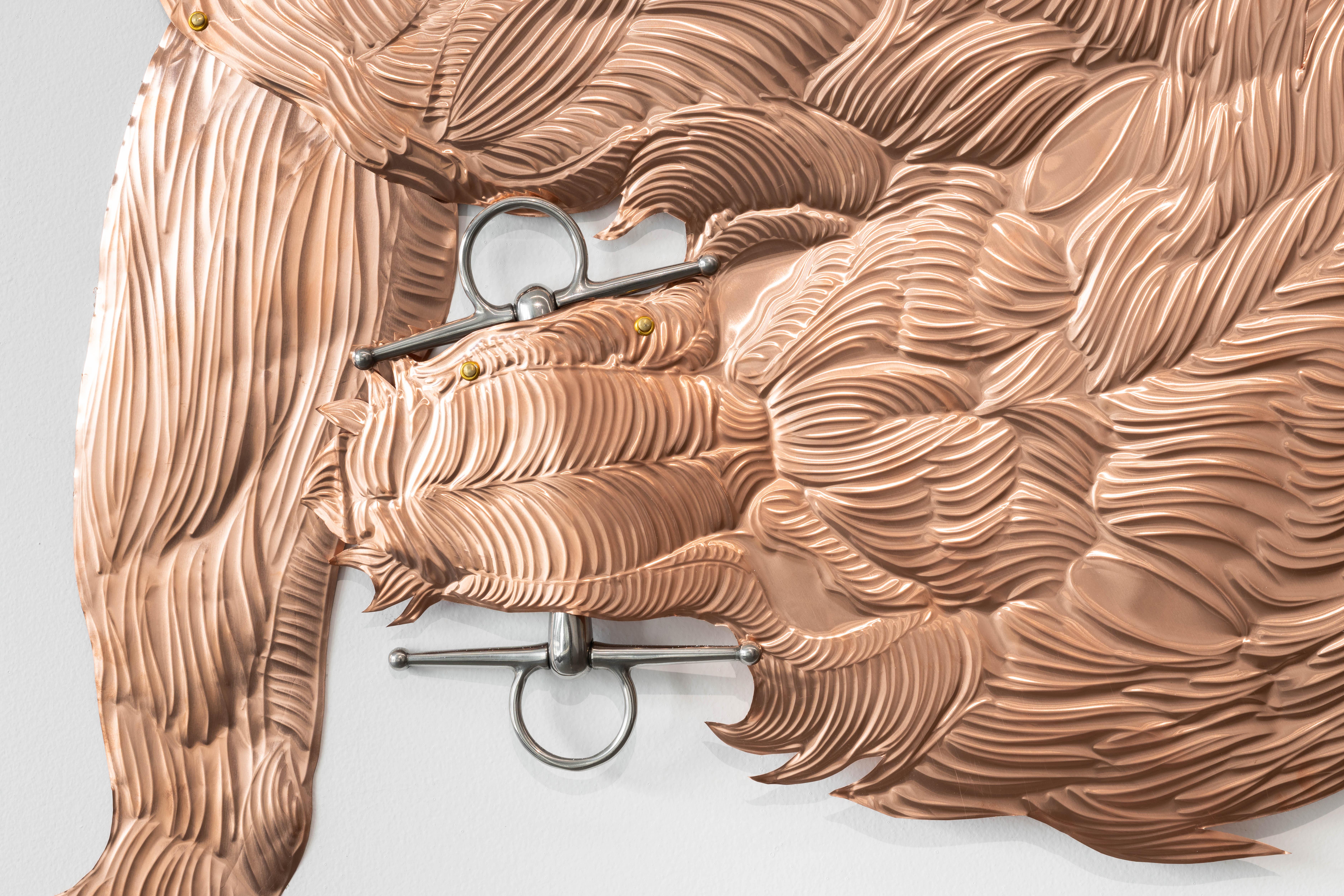
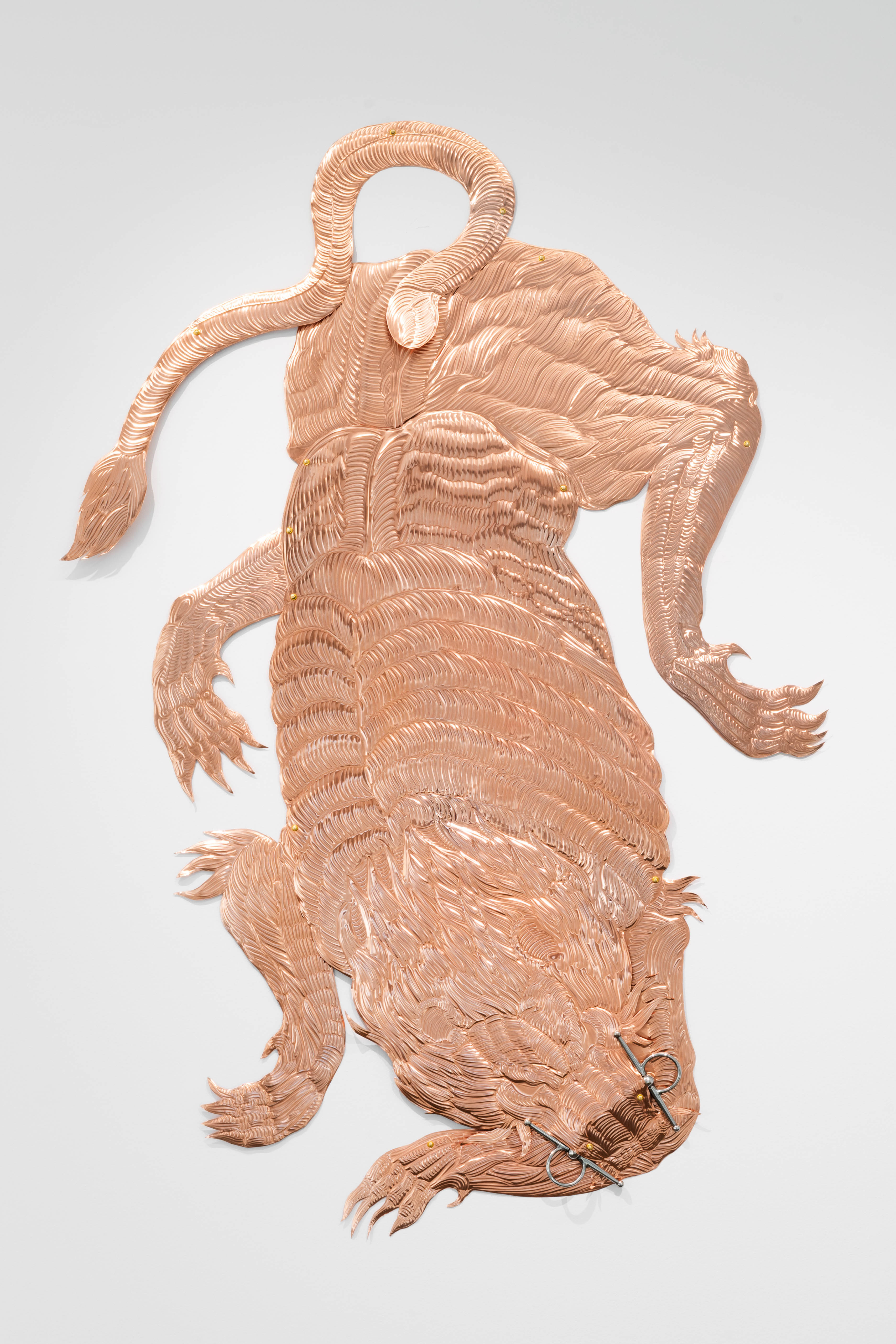
Emerging from analogous premises are Lion I and Lion II (2025), zoomorphic sculptures informed by the animal’s symbolic presence across civilizations of the Iranian plateau and by the widespread iconography of the lion attacking a bull or horse, traceable from early Iron Age kingdoms to the reliefs of ancient Persepolis. Hand-shaped with careful attention to musculature, movement and fierce expression, each lion clasps a silver horse’s bridle in its jaws, firmly encapsulating and expanding an ancient iconographic motif equally defined by dualism (between order and chaos), articulated through their mirrored, face-to-face stance.
Situated within recurrent dialogical processes, the continuous hybridism unfolding across Tinct sets forth a mutable terrain where beings, stories and matter inhabit states of transition, a world of forms that ceaselessly remind us of the ephemerality and ongoing transformations that tinct not only the physical world but also memory and imagination.
—
1. Album from the 14th and 15th centuries depicting a diverse set of themes, including deities, dervishes, and scenes of daily life and rituals, offering insight into the region and its customs.