Et fugit ad salices
Gil Heitor Cortesão
Et fugit ad salices
Lisbon
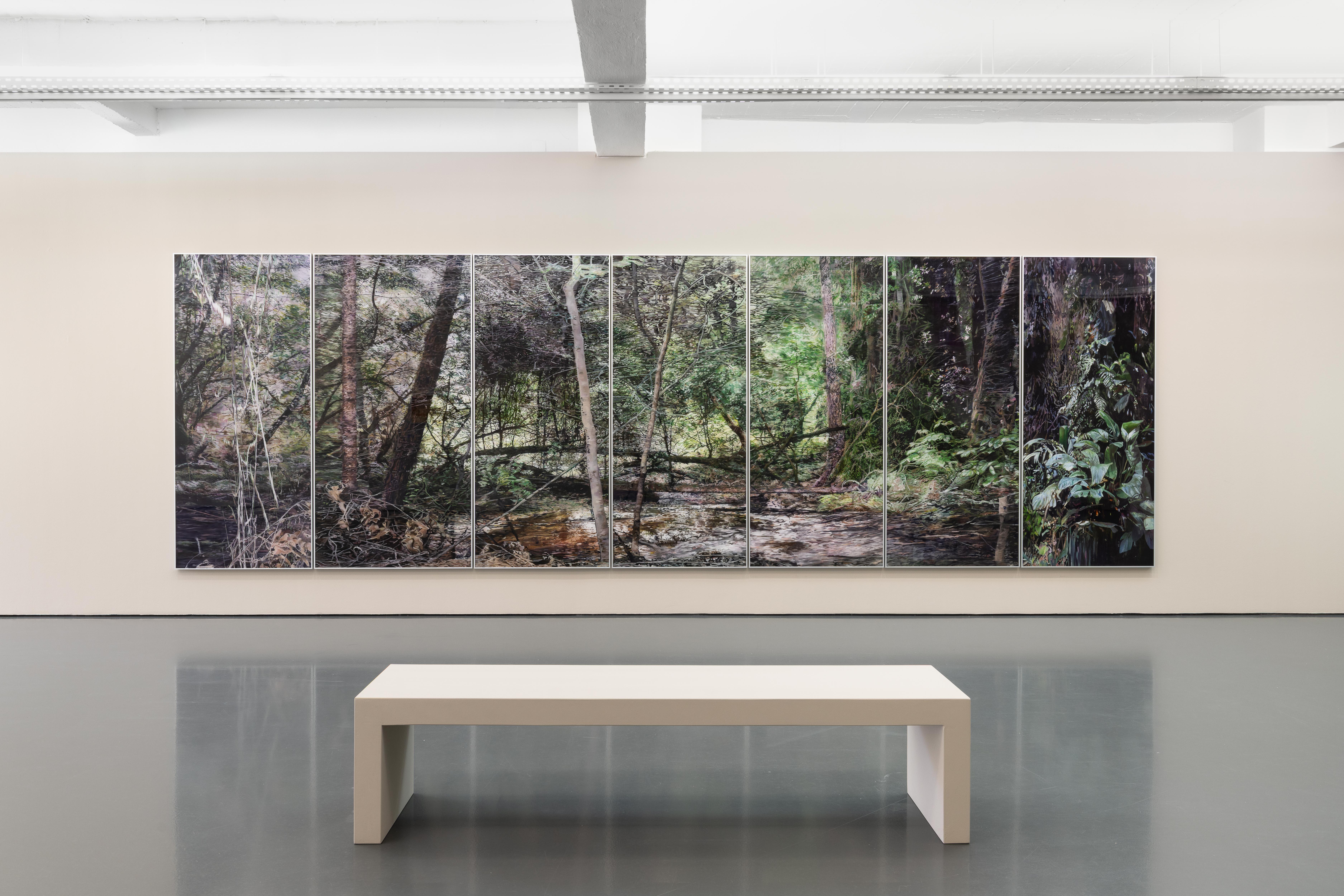
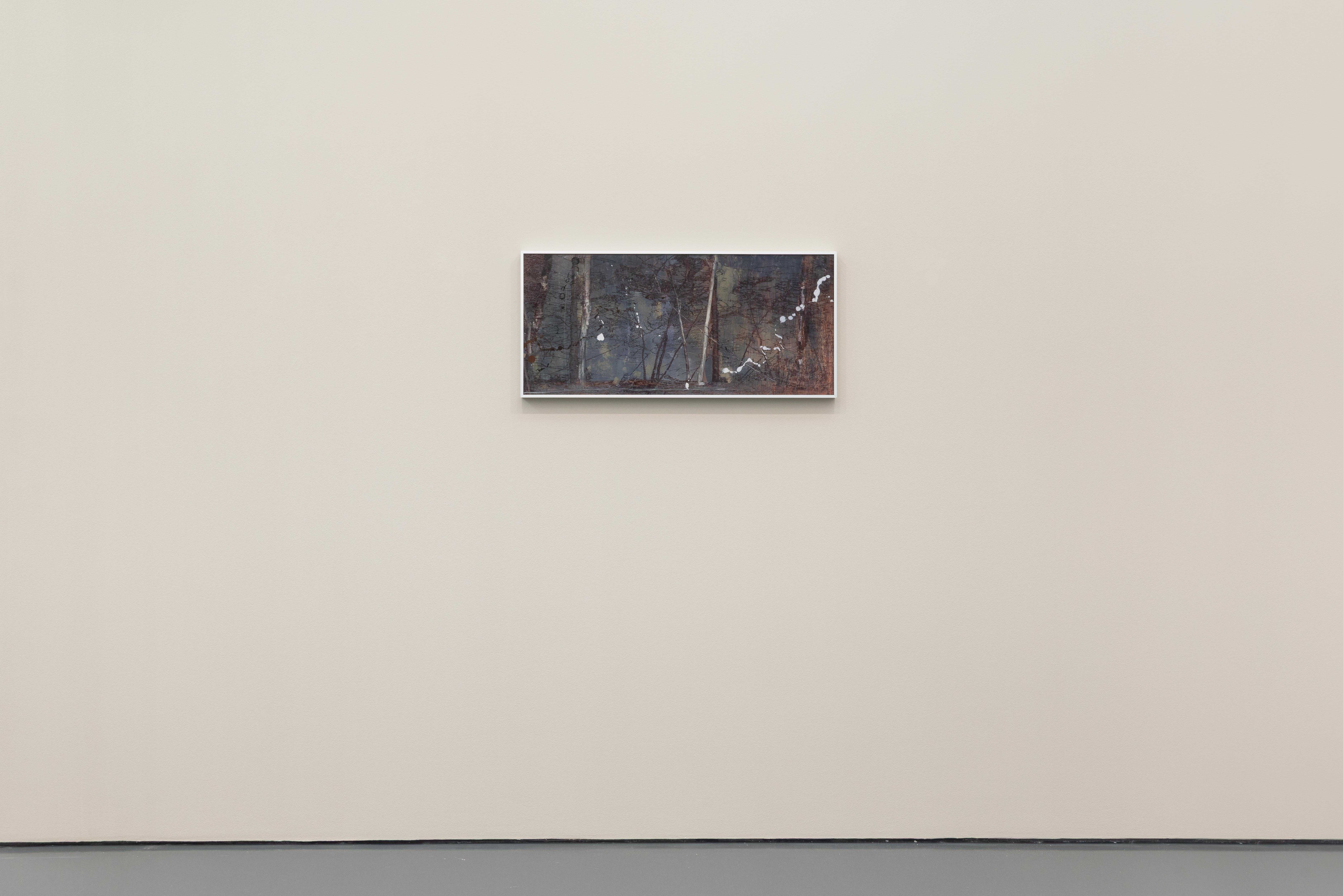
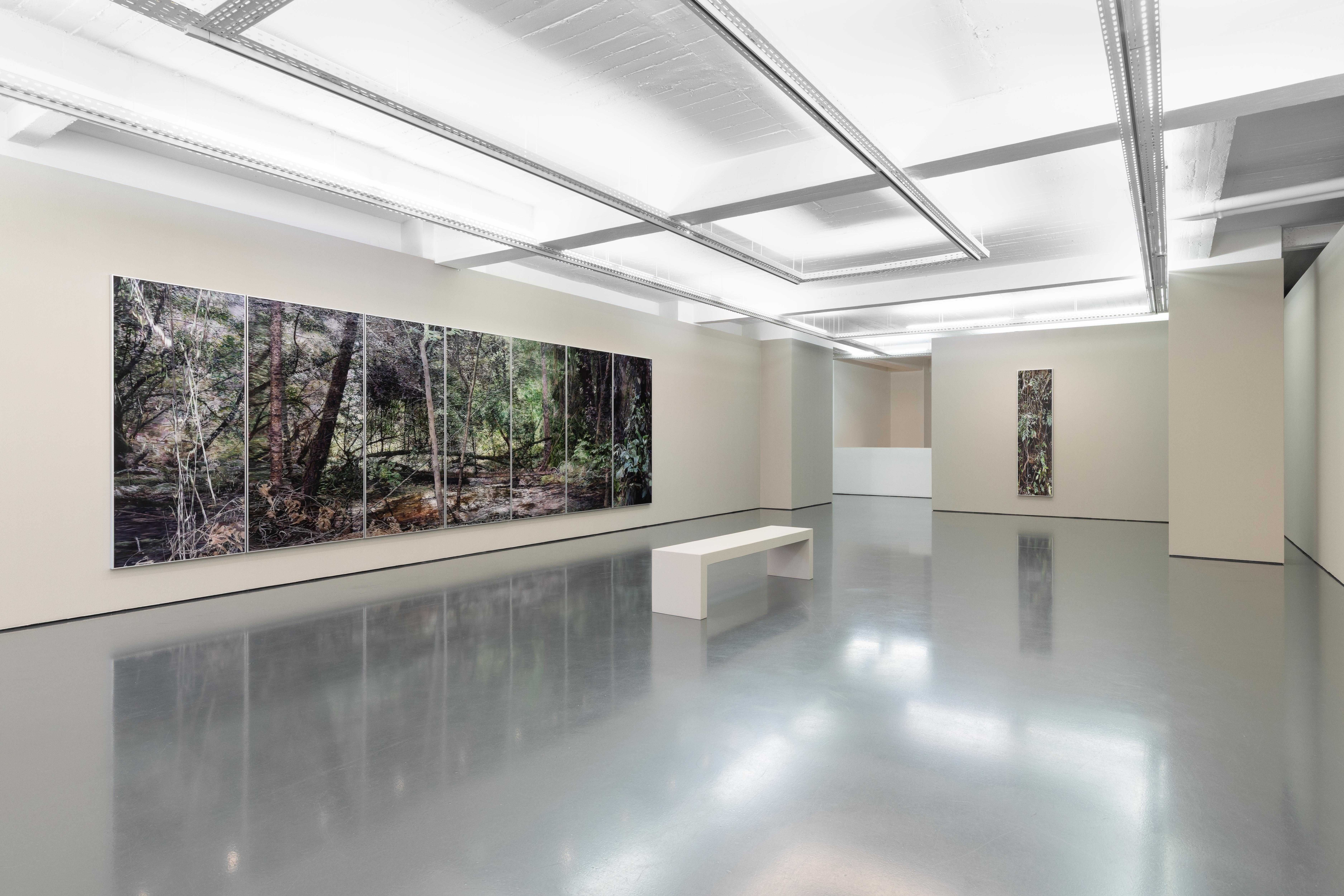
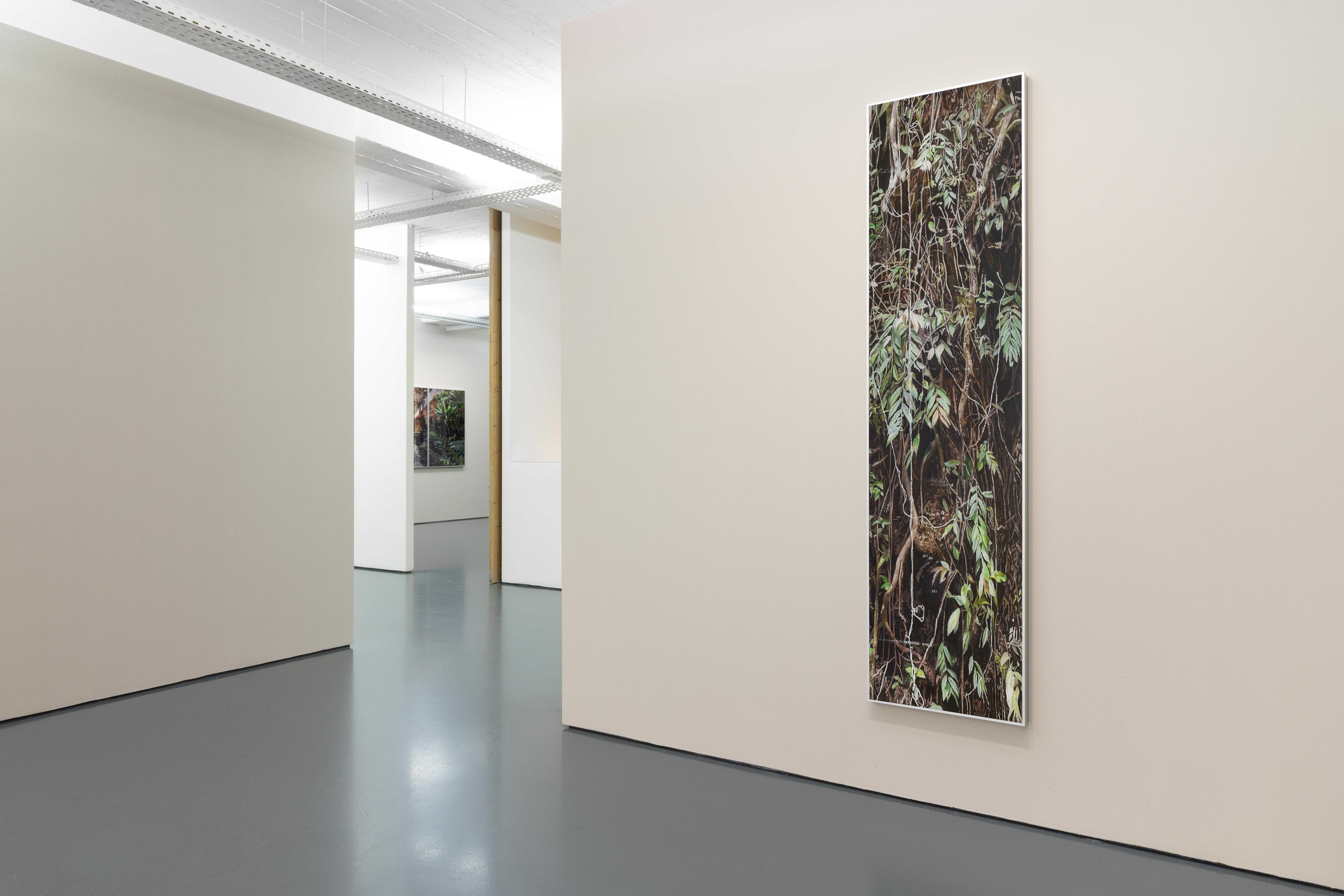
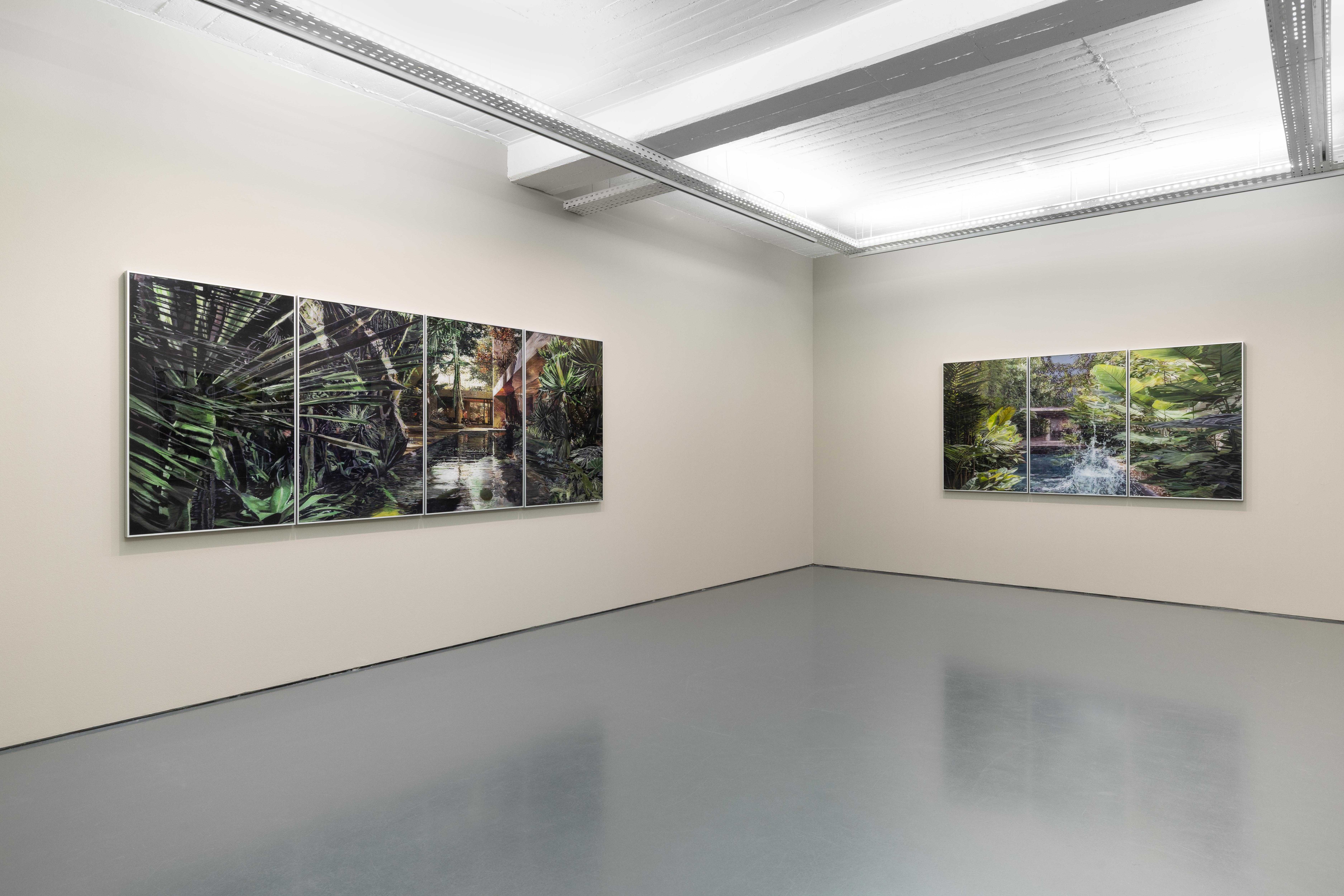
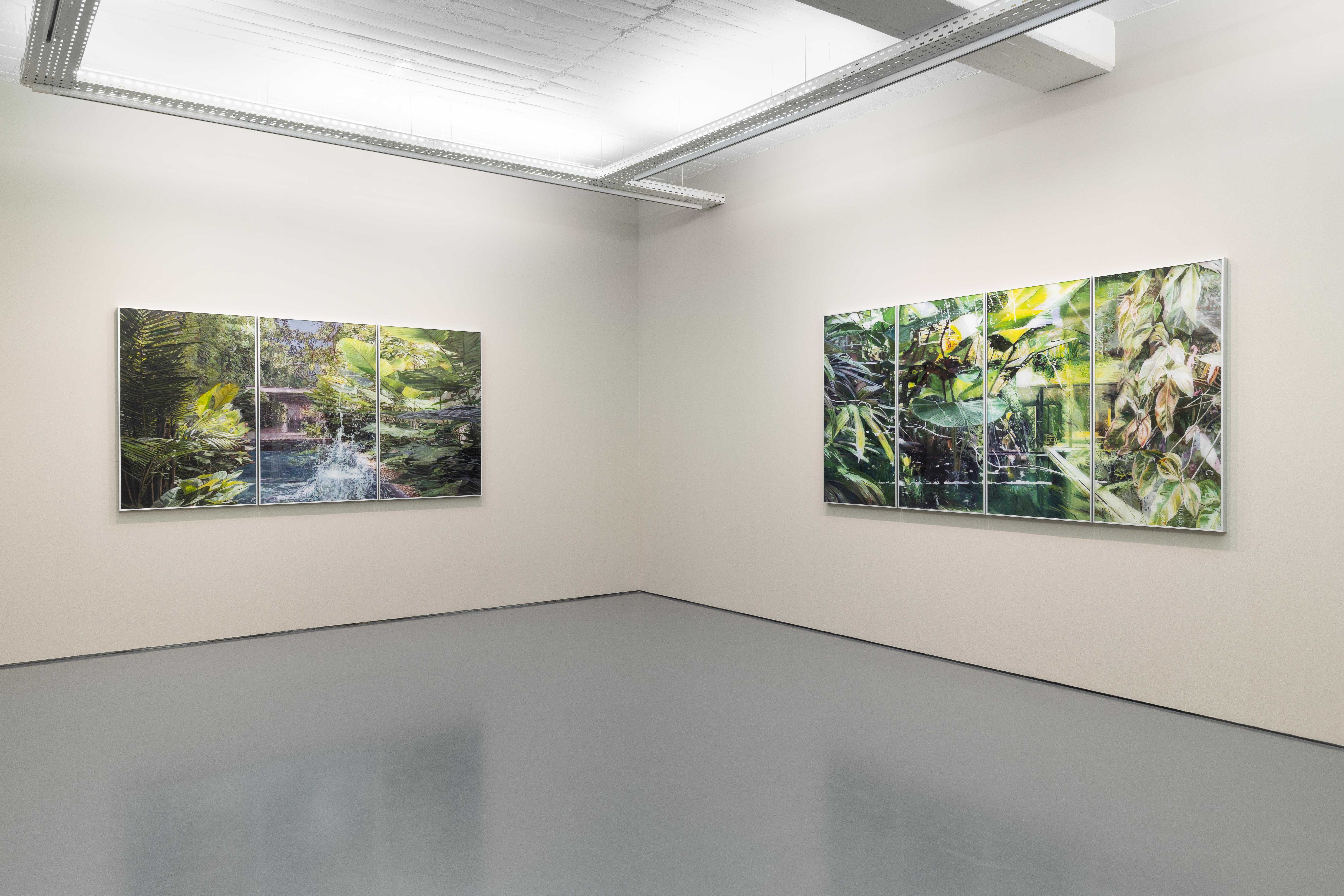
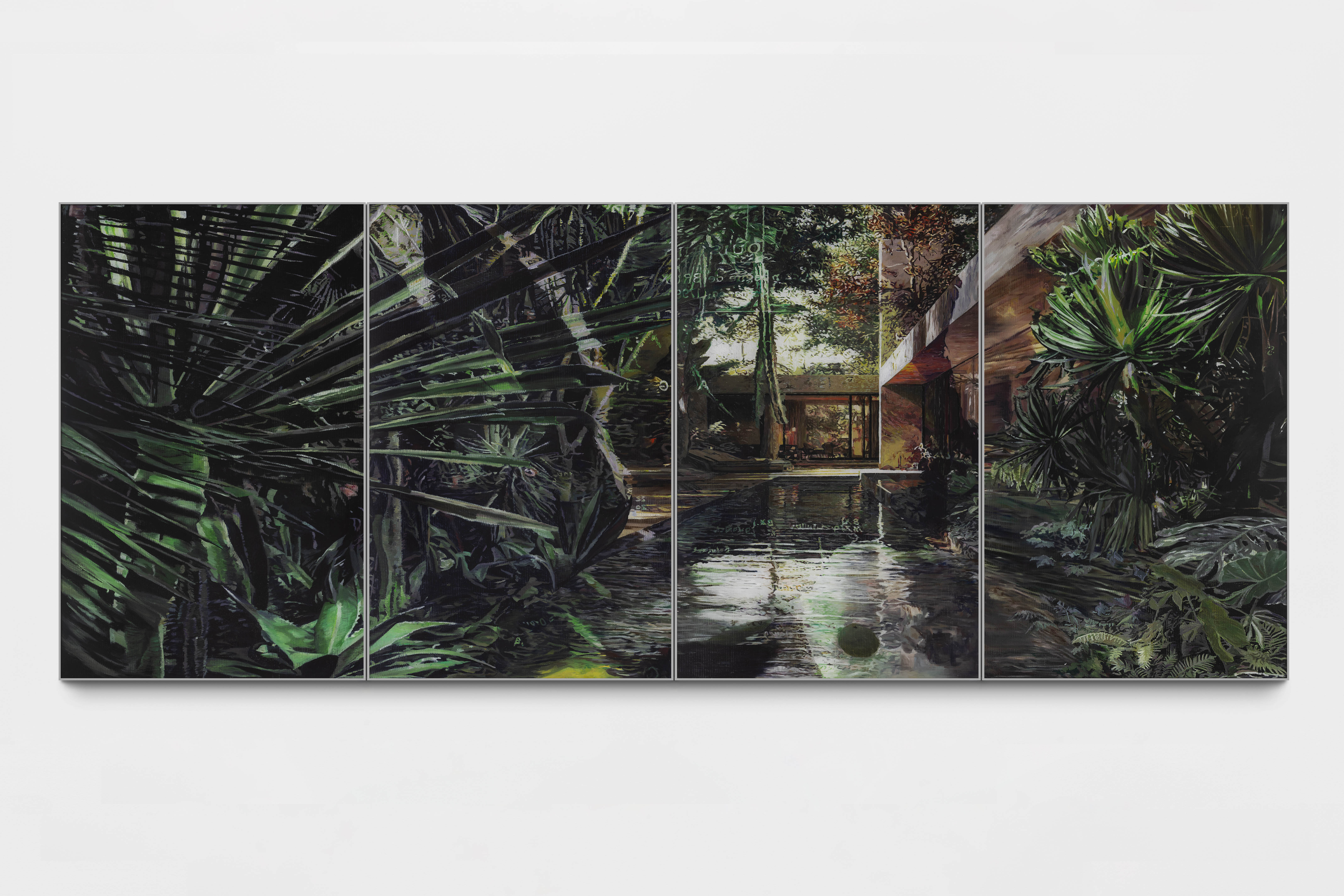
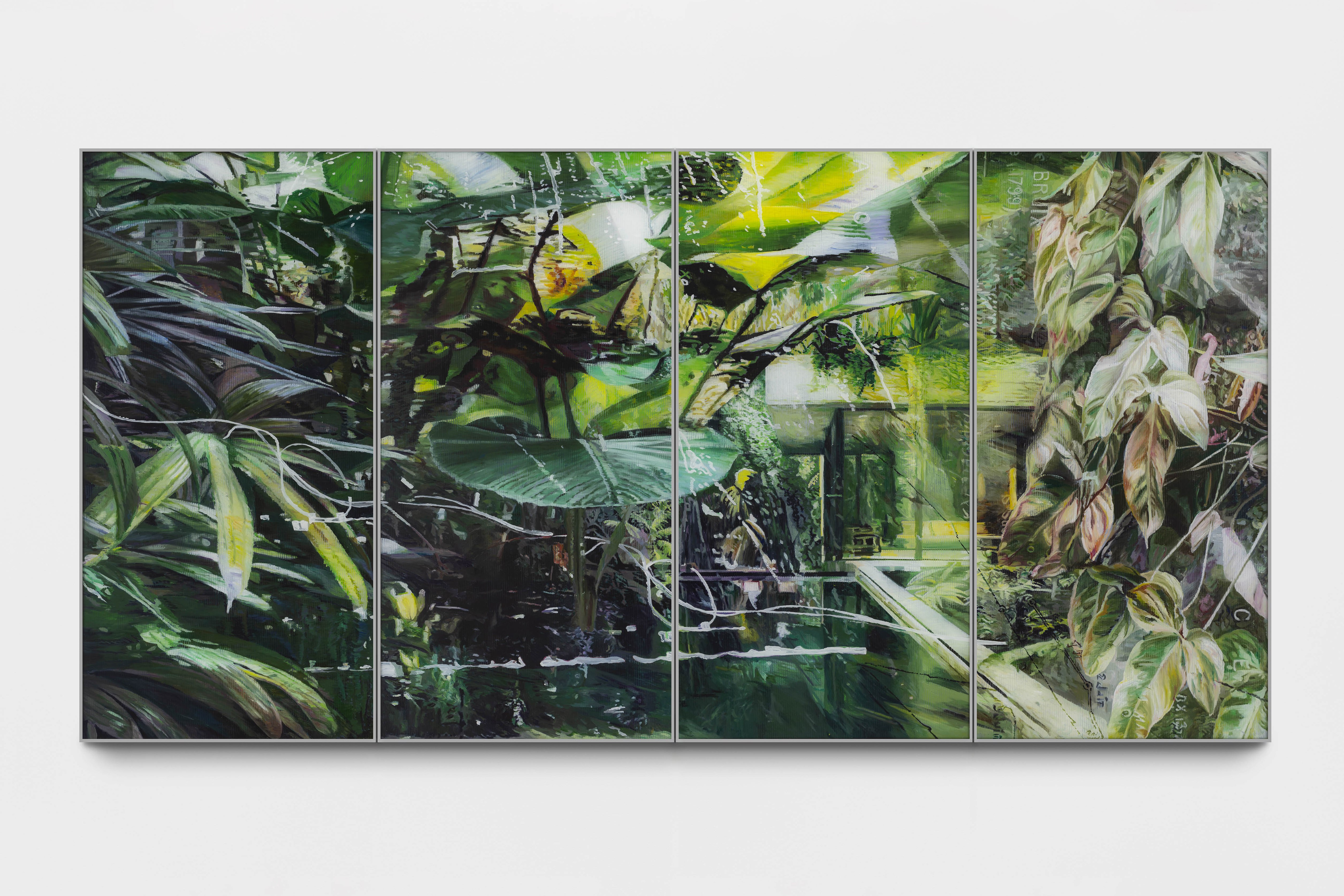
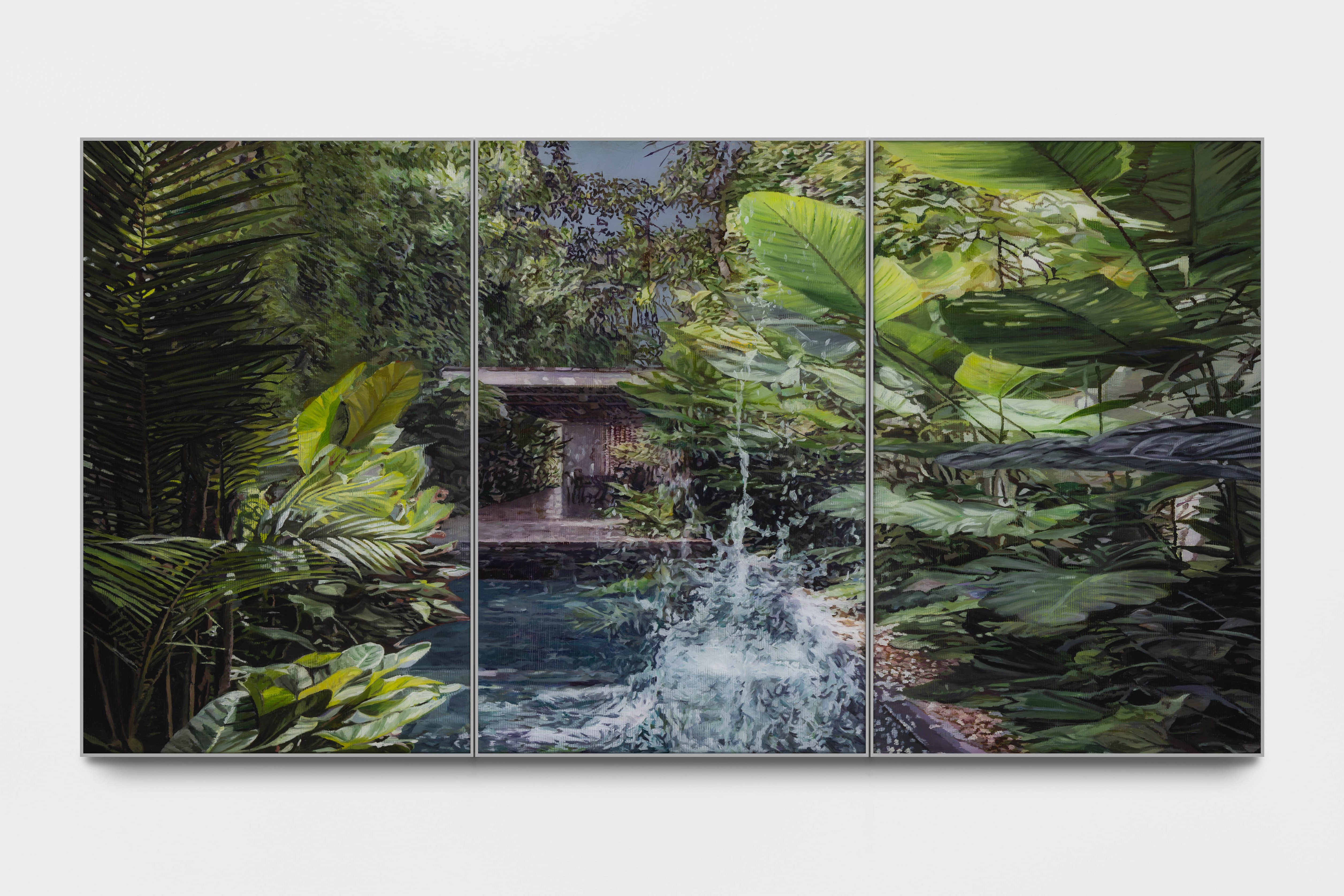
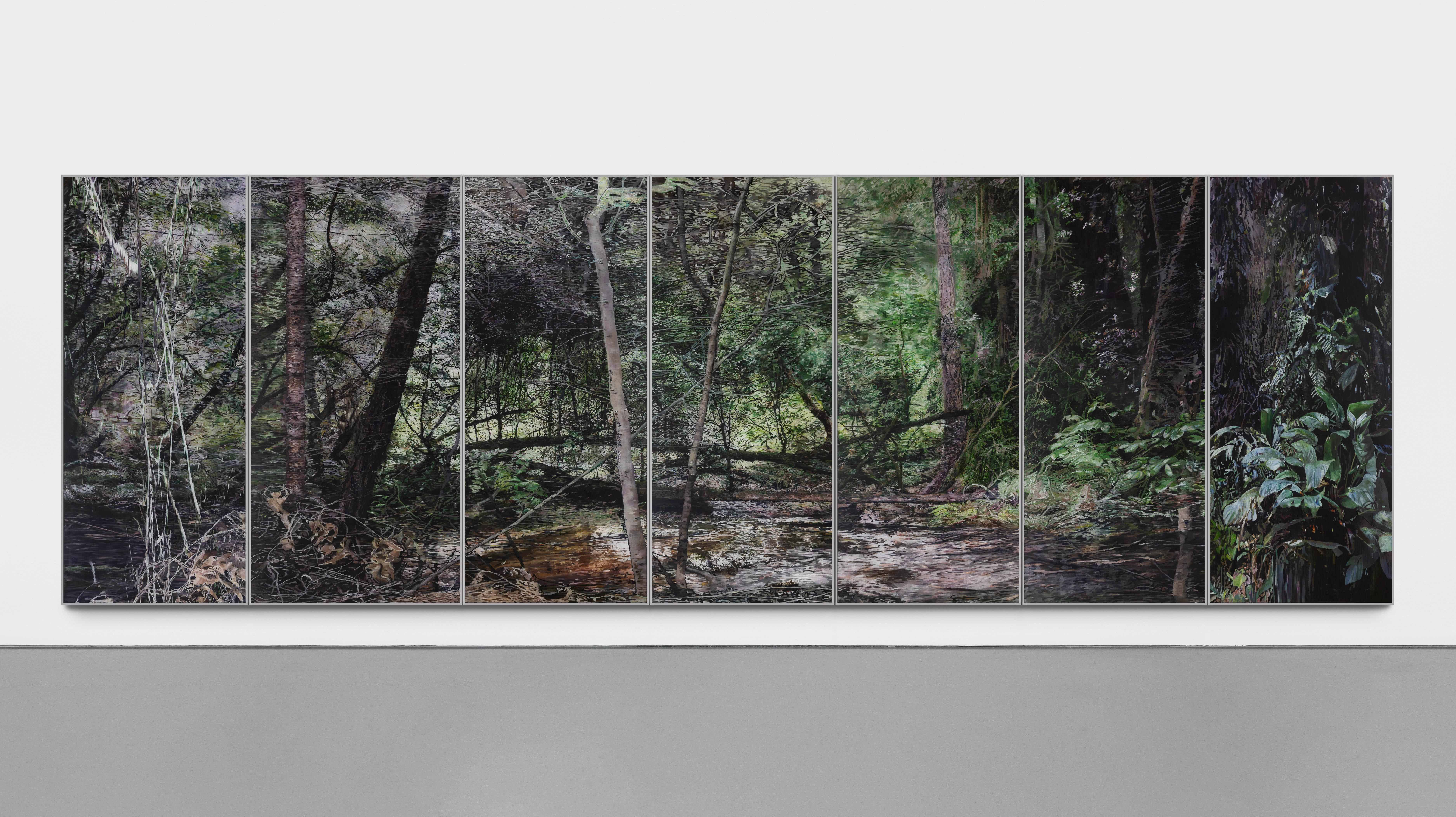
Pedro Cera is pleased to present Et fugit ad salices, Gil Heitor Cortesão’s twelfth solo exhibition at the gallery. Its title, drawn from Virgil—“and she flees to the willows”—evokes a moment in a pastoral song in which a girl retreats among the trees while ensuring that her flight is witnessed. The gesture is therefore not quite one of escape: withdrawal becomes an invitation and concealment a means of making oneself visible. It is this tension between opposing impulses, between disappearance and disclosure, distance and invitation, that forms the point of departure for the exhibition.
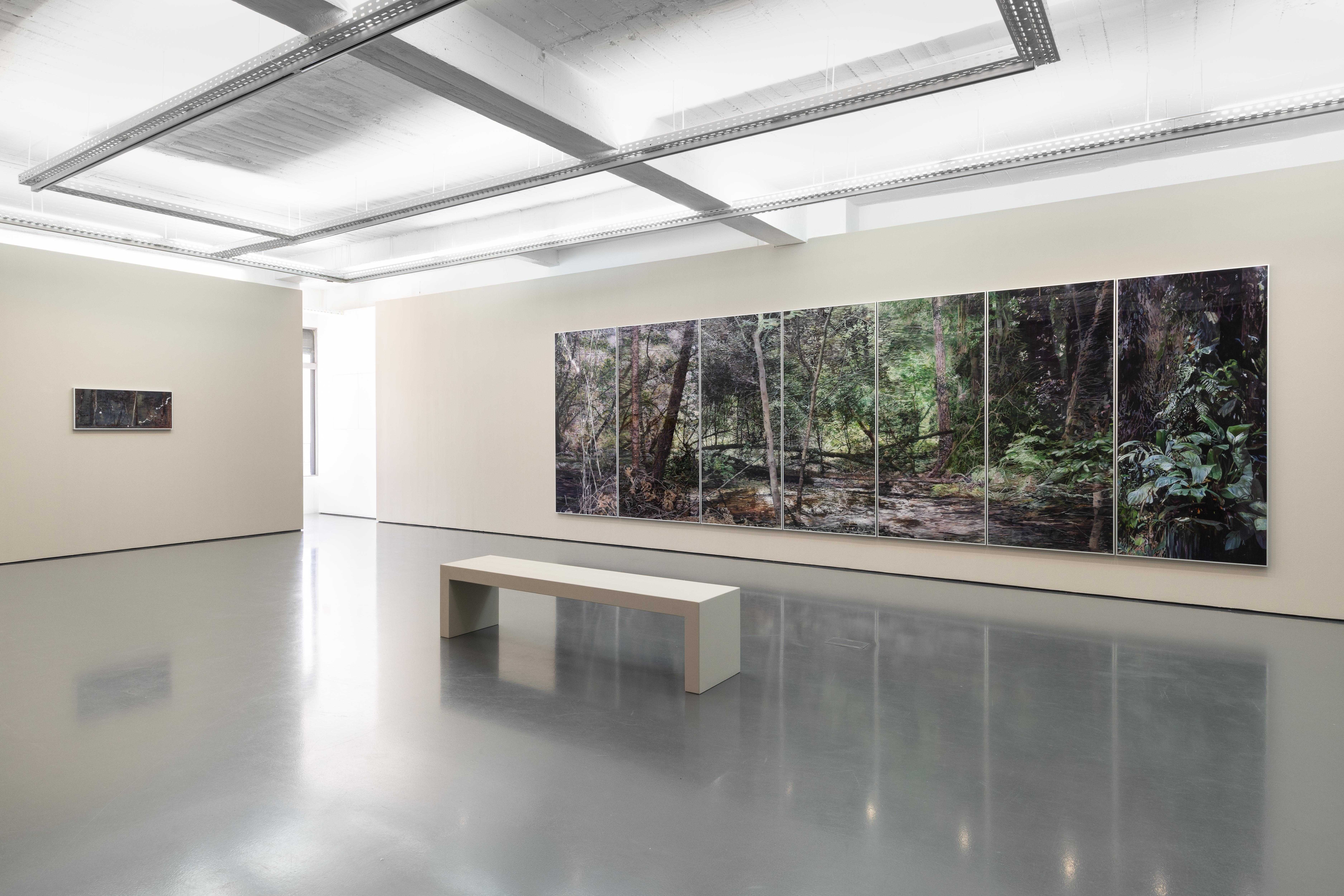
This same ambiguity structures our encounter with Cortesão’s paintings. They appear to offer the possibility of retreat, a temporary refuge from the city beyond the gallery walls, yet they never allow the viewer to fully disappear into them. Their Plexiglas surfaces return our reflection, bringing the body into the very landscape that seems to invite its escape. Withdrawal becomes a form of presence: the closer we move towards the image, the more insistently we encounter ourselves within it. Looking thus becomes an experience of simultaneous immersion and estrangement, in which the promise of elsewhere is continually interrupted by the recognition of one’s own presence.
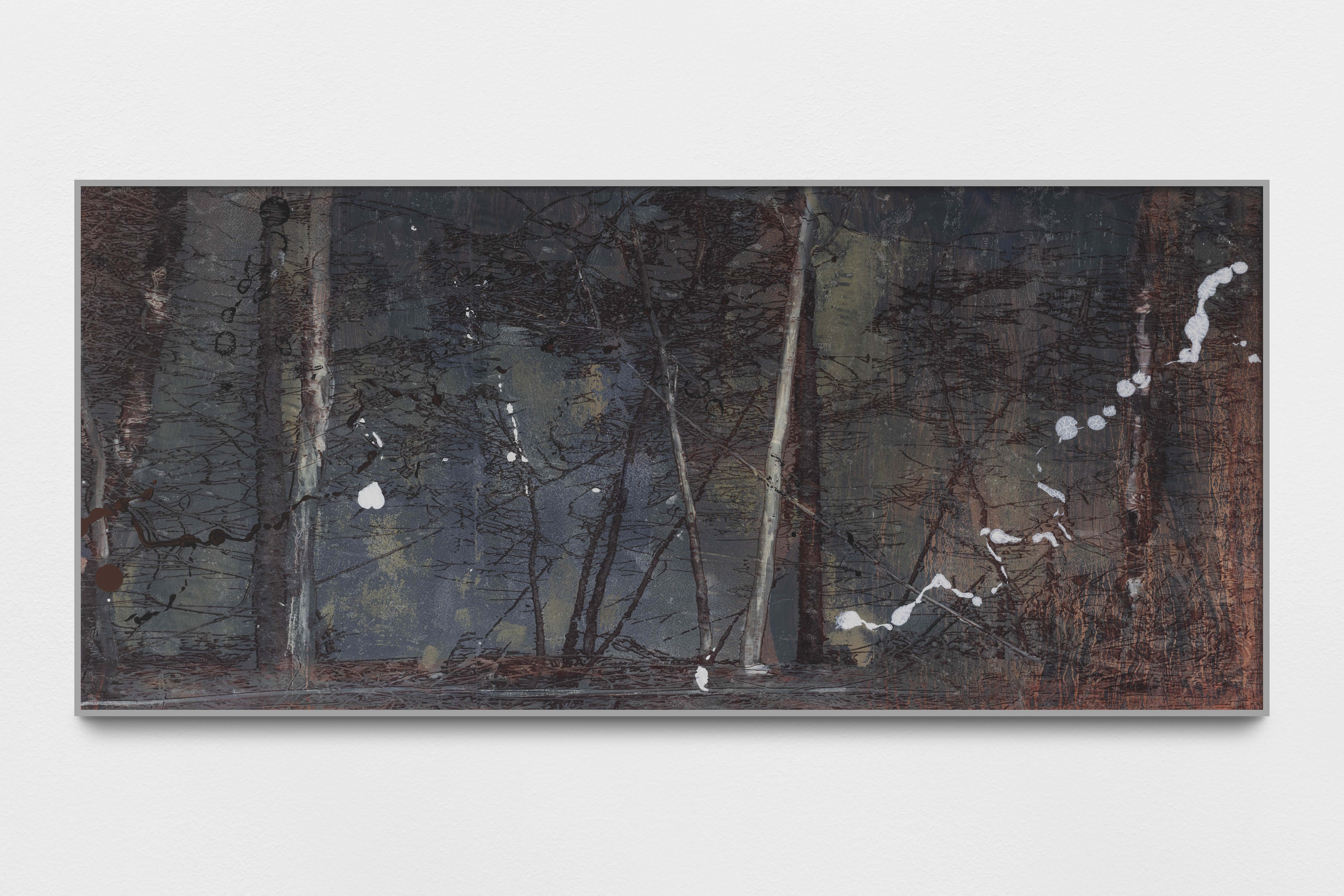
The landscape, too, resists the promise of elsewhere. What initially appears continuous and coherent is, on closer inspection, a construction assembled from photographs taken across different locations, seasons and years. These disparate fragments are brought together to produce a landscape without an original: a place that has never existed beyond the image itself. What emerges is a kind of second nature suspended between the natural and the artificial. And yet, like the figure retreating among Virgil’s willows, it remains deliberately available to be discovered.
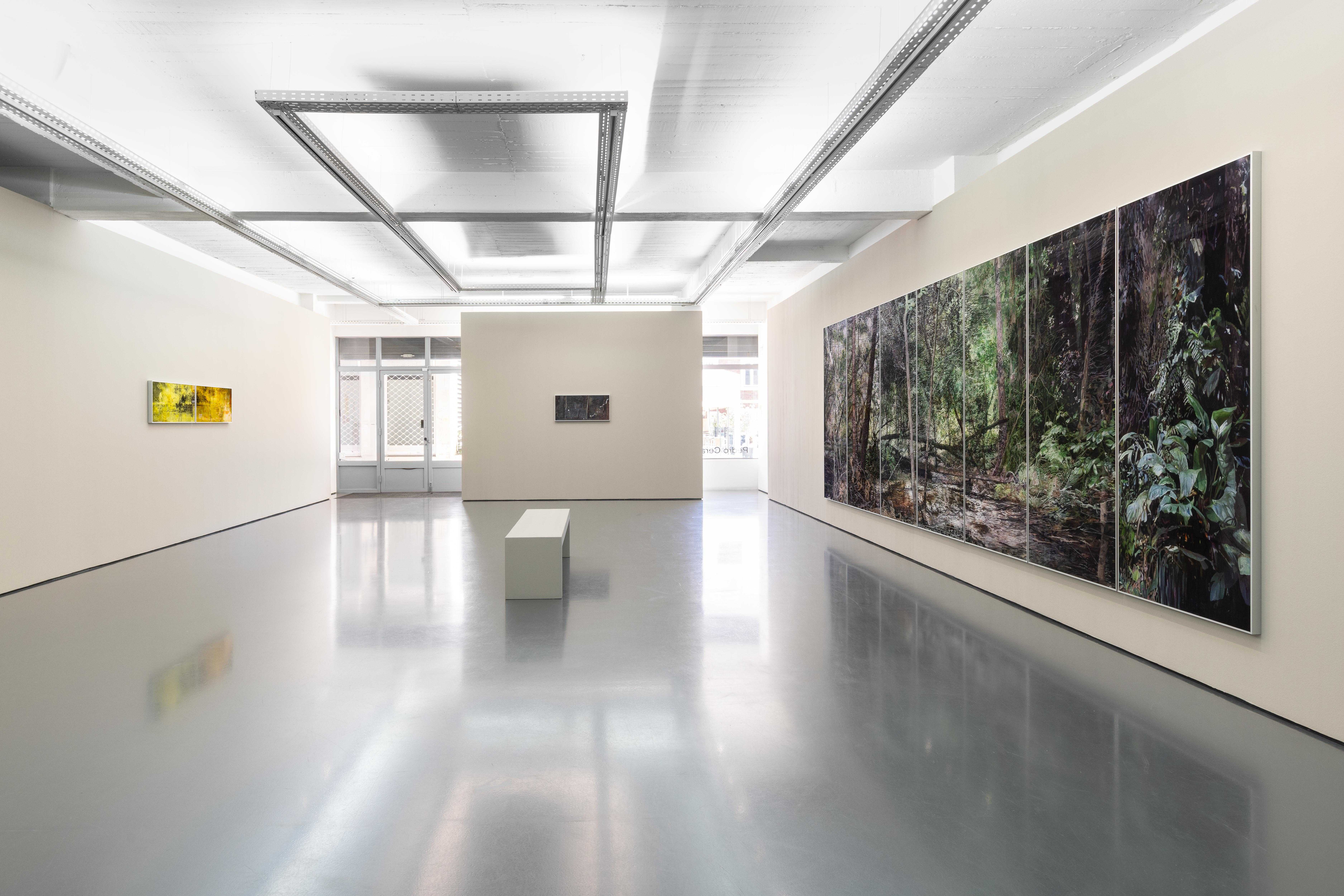
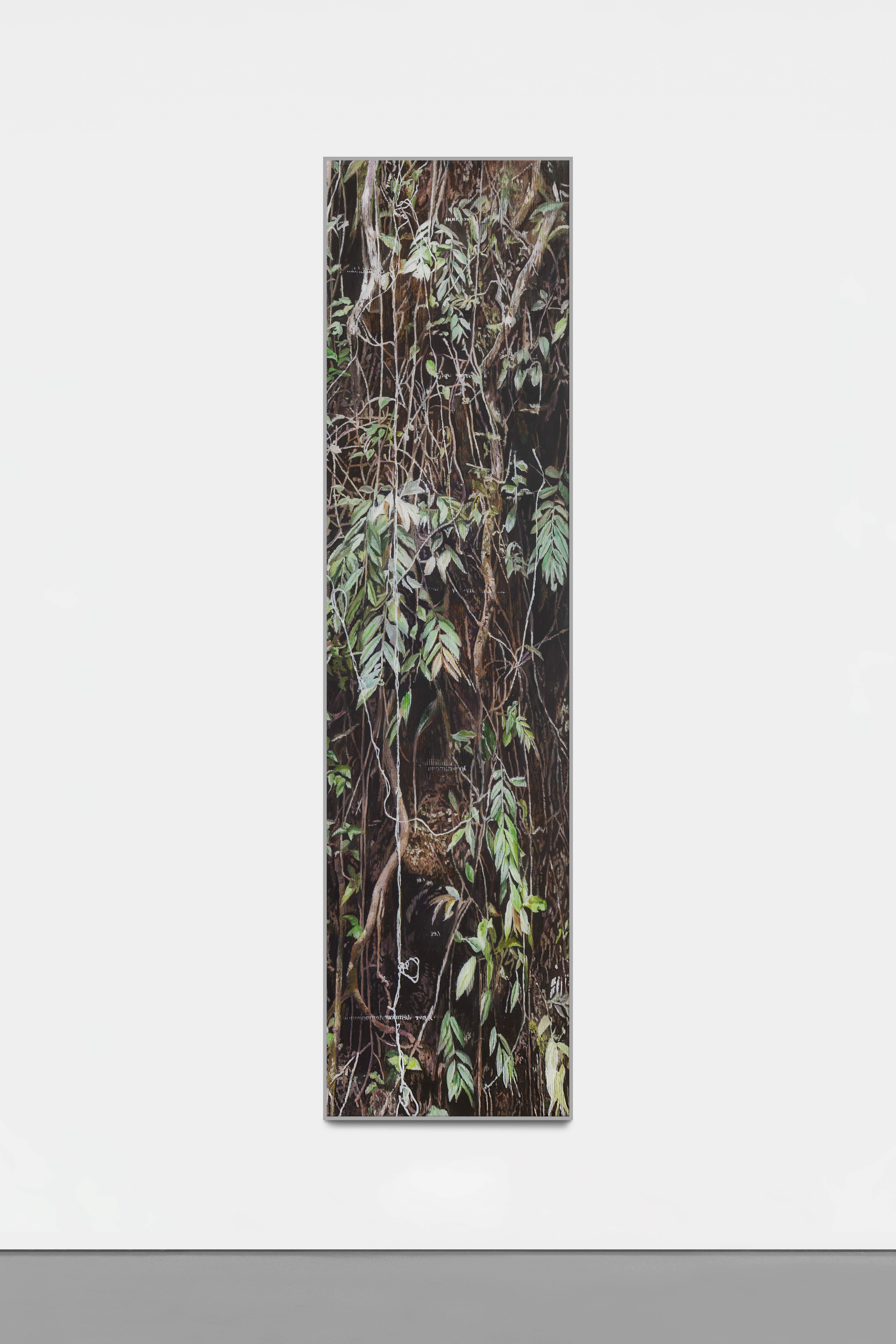
This constructed landscape assumes its most expansive form in the polyptych Et fugit ad salices (2026), which dominates the main room and unfolds through the viewer’s movement along its length. As one moves, images shift and the landscape is continuously reconstituted. It behaves less like a picture than something akin to music: a sequence one can enter at any point, follow forwards or retrace, without ever quite arriving at where it began. The ‘flight’ invoked by the title thus becomes a movement through the landscape itself—a rhythmic, continuous mode of looking without a fixed destination. Nearby, the freestanding Selva (2026) inhabits the same impossible terrain through a different spatial logic. Its verticality interrupts the horizontal movement of the polyptych, shifting the terms once again: flight becomes a vertical gesture, while refuge emerges as a counterpoint to exposure.
Yet fugit is Virgil’s term both for the flight that gives the exhibition its name and for the passage of time itself: fugit irreparabile tempus, time that passes and never returns. Just as several places merge into a single landscape, so several moments converge on a plane holding countless futures—all still possible, though only one will come to pass. Yet these unlived futures do not flee forwards into loss, but sideways, into a past in which they were never quite present.
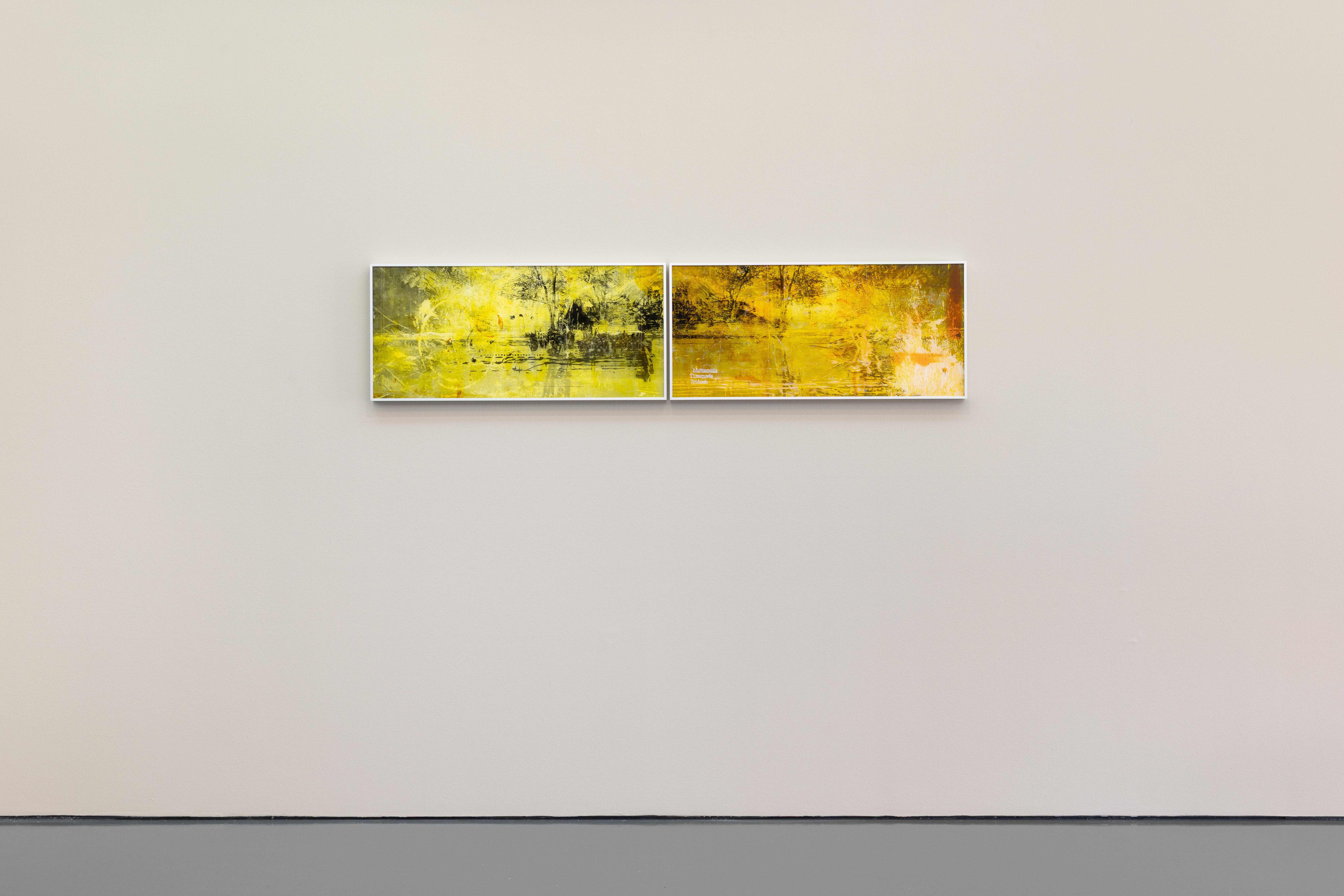
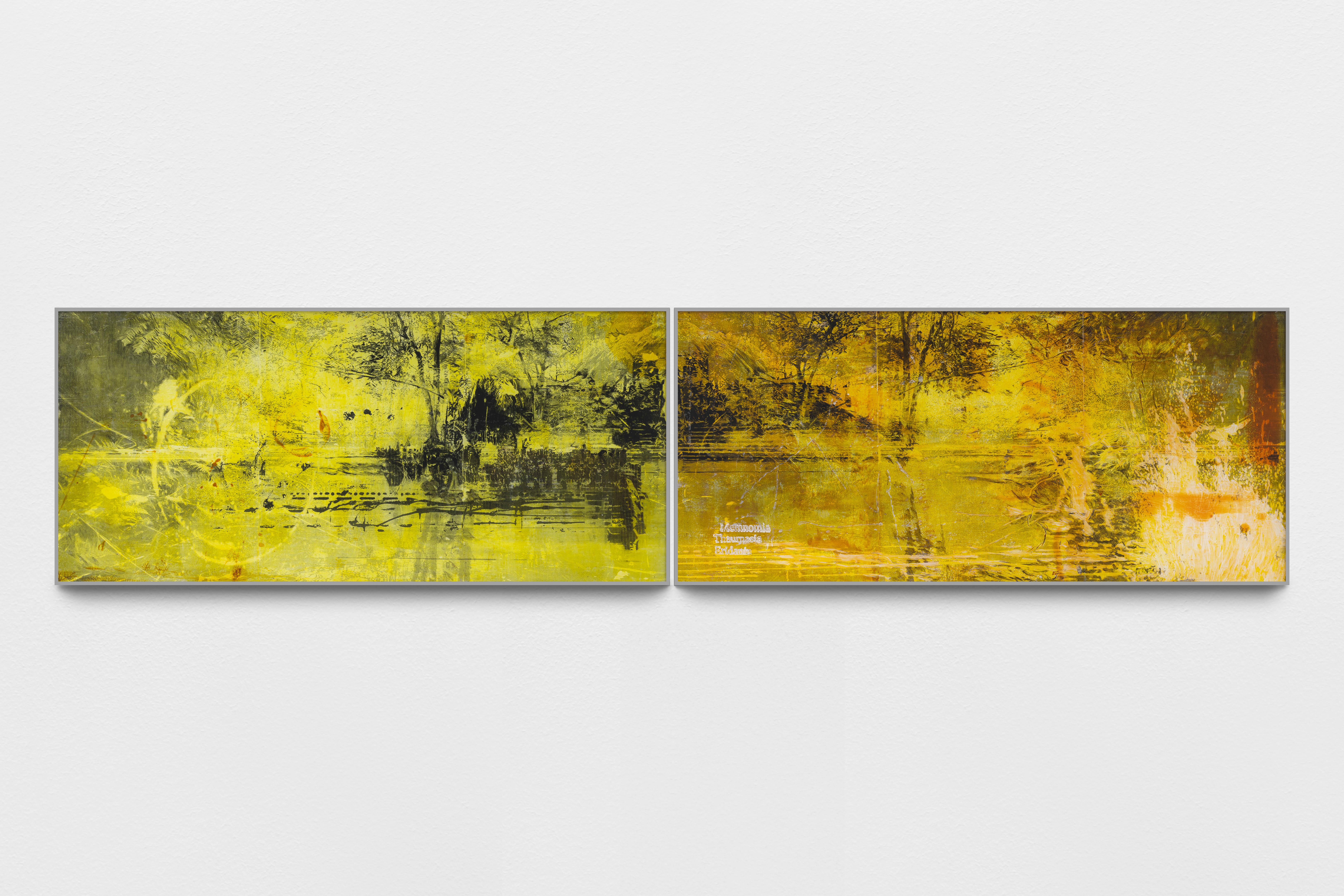
In the back room, architecture enters the landscape. Until now seemingly composed entirely of trees and vegetation, nature is interrupted—or perhaps extended—by the presence of a pool, a wall, the fragment of a built structure. The distinction between inside and outside begins to dissolve: architecture does not simply contain the landscape, nor does nature merely surround it. Instead, the two become entangled, each appearing to encroach upon and absorb the other. These architectural fragments also suggest a human presence without ever depicting it directly. Someone appears to have been here, yet what remains are only traces of a future already lived and over. Recognisable enough to be situated in time, these spaces nevertheless seem strangely retrospective, as though encountered from a moment that has yet to arrive.
Ultimately, Et fugit ad salices offers no refuge without return. To enter Cortesão’s landscapes is to move through places suspended between nature and construction, presence and disappearance, between futures that have not yet happened and those that somehow already belong to the past. Like Virgil’s figure among the willows, they withdraw only to invite us closer. Having fled so far, there is no other way forward than to retrace one’s steps through what has already been traversed.